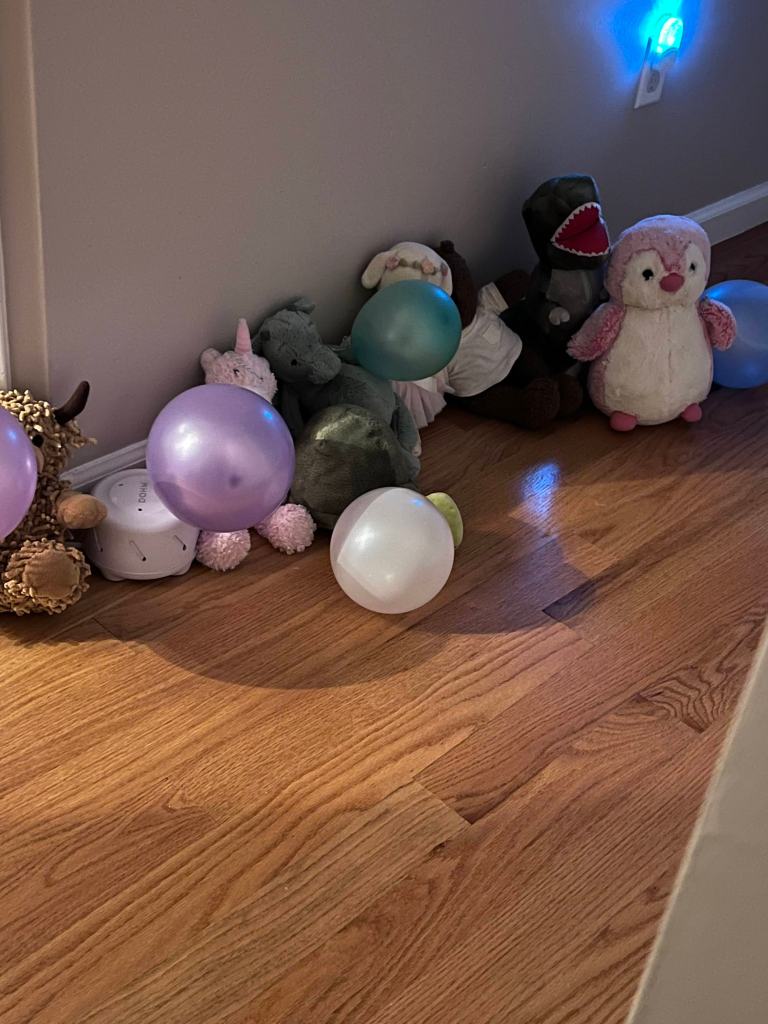
A 6th Birthday with a Dash of Healthy Nostalgia

“The days are long but the years are short.”

~Gretchen Rubin

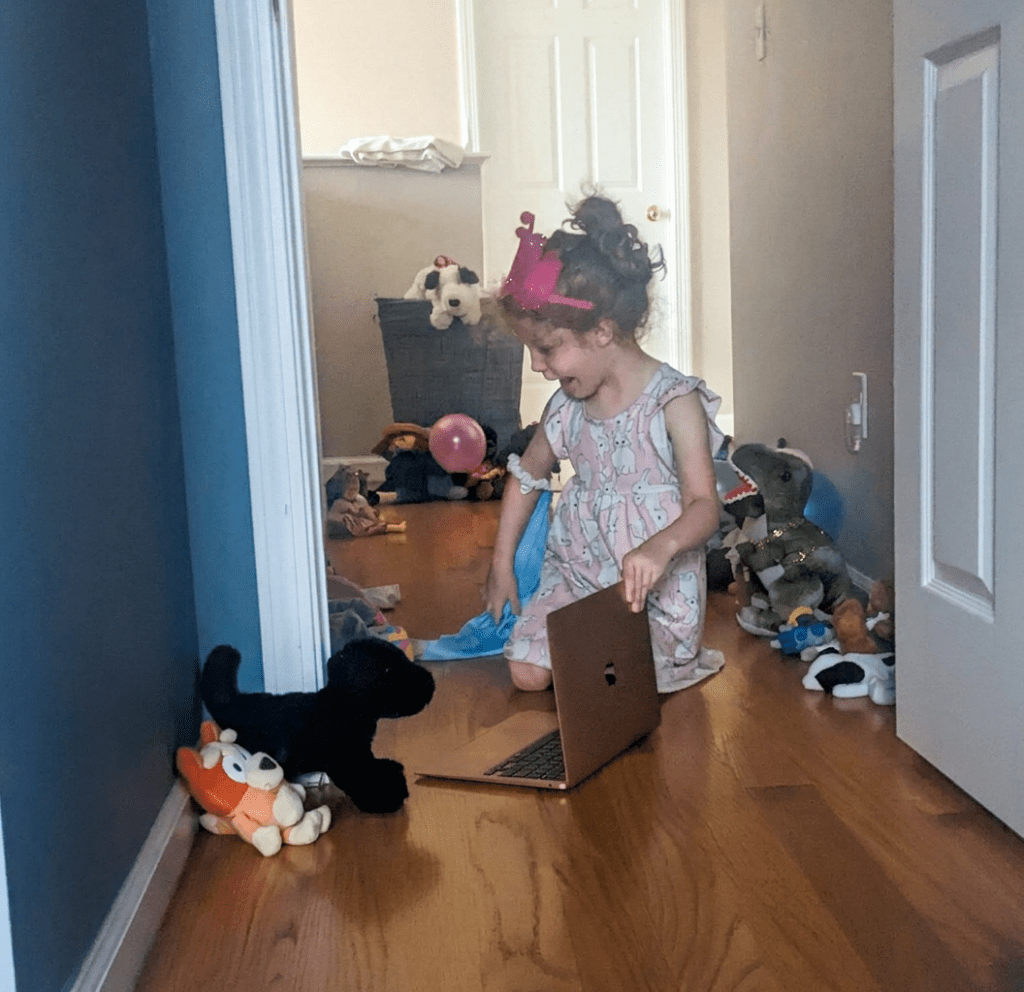
When our daughter insisted a few weeks ago on having her stuffed animals greet her again on the morning of her 6th birthday, I was secretly thrilled. This was a last minute scheme we implemented on the eve of her 5th bday after seeing a clever TikTok my mother-in-law sent. I recall the video featured a toddler opening their door and being blown away by the “stuffy party” waiting for them. My wife and I thought our daughter would get a kick out of it, but we also weren’t sure if she had “aged out” of this kind of thing. Turns out, it was a hit and low and behold, she requested an encore presentation this year.

They say “you blink” and your child is all grown up. I’m aware we still have some years ahead of us, but it’s also not lost on me that time is moving quickly. In September she will start first grade. She’s using language that I’m sure I didn’t teach her. (New favorite phrases include “bro” this and “bro” that. She recently started saying, “duh.”) These phrases seem to come out of nowhere and when I hear them I’m partly inclined to push back and say, “Excuse me? We don’t say that, etc.” While most of me just thinks it’s so darn cute. She still seems so little, and yet, she’s testing new boundaries and limits each day.

Our kids’ questions and stories are getting more sophisticated and harder to answer. And I’m reminded lately there is no playbook out there to help us parents figure out how to guide them…

  • We are leaving a concert on a recent summer night, waiting for a bus to take us back to our cars, and with the most impractical and improbable timing, she exclaims to my wife, “I’m afraid to die.”
  • When she comes home hot and sweaty during the first week of day camp and shares that some of the kids are poking around asking why she doesn’t have a dad. They don’t believe her that she has two moms. Her response to them…. “It’s true. I do.” (Sigh. What are THEIR parents sharing–or not sharing–at home?)
  • We are finishing up dinner the other night and she shares under her breath, albeit a bit hesitantly, that some of the kids were talking at the bus stop about being Christian and celebrating Christmas. Our daughter exclaims to the bus counselor, “I’m Jewish!”

I’m beyond grateful that she is starting to open up about these day-to-day queries. And yet, my chest tightens at the thought of what other questions, disappointments and mishaps lie ahead. Will she share all of them and will we be able to catch all of the nuances and eventual tears?

I’m not ready for elementary school. No thank you. Can we just rewind a few more years?


This year her 6th birthday falls on a Saturday, the first Saturday since the year she is born. It’s summer 2020, the height of COVID. There are no visitors allowed in the hospital and we return home to a dark cloud still hovering above us. How are we going to manage? We leave without an instruction manual, other than a handout on postpartum depression and a “poop and a pee chart.” It seems I’m always looking for signs and “mile markers” to make a connection back to that first year. Ground Zero. We had no idea what we were getting ourselves into. (We still don’t most days).

And yet, I wonder if we can look at this time in our lives as a “both/and”? Can we look back with a healthy “nostalgia” for the early days of tracking “poops and pees”? And can we be grateful for the growing independence and testing of limits that come with a slow separation from our little ones. A type of “separation” that I’m realizing more and more defines motherhood all together. As usual, Brandi Carlile nails this contradiction with her lyrics from You Without Me.

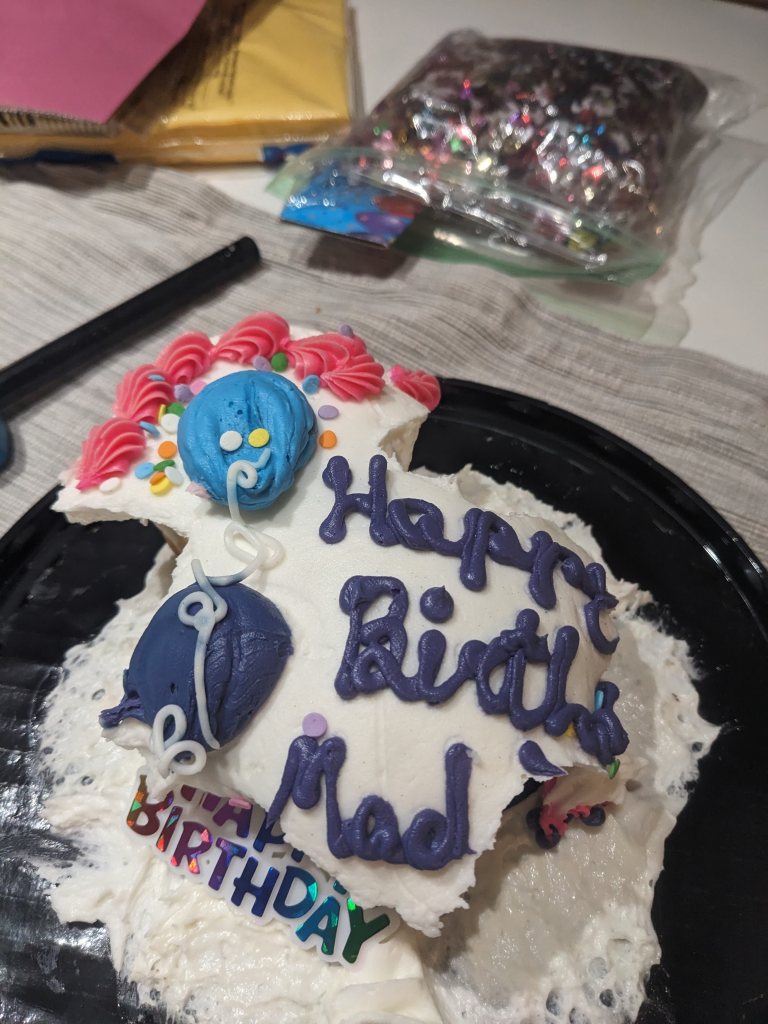
So happy 6th birthday, dear one. May you continue to grow into yourself, with confidence and ease and that sassy spirit we all love.

Lyrics–You Without Me

“Oh

Was your smile always crooked? Was the freedom ever free?
Do you kick the rocks between your feet, after all this time with me?
You can listen to your own records now, decide what you believe
You can pray on stars and skip the gods like stones across the sea

But I would know you anywhere, I lost myself in you
Heavy are the hands that you are free to slip right through
Do what you have to do

There you are, my morning star, I wondered when you’d show
Give me just a quick thumbs up, a wink before you go
I never heard that voice before today, I remind myself to breathe
There you are, it’s just you without me

I’m late to another game, I guess I never learned the rules
I showed up with a broken name and handed it to you
I’m not sure if you can fix it now, but if you wanted to
I would follow you around and carry all your tools

I would know you anywhere, I found myself in you
Heavy are the hands that hold the changes you go through
Do what you have to do

There you are, my morning star, I wondered when you’d show
Give me just a quick thumbs up, a wink before you go
I never heard that voice before today, I remind myself to breathe
There you are, it’s just you without me
Without me

As predictable as time and age, but comforting in some strange way
Time makes every one of us an absolute cliché
But when I met you face to face, none of it was true
So who am I if I’m not you?

There you are, my morning star, I wondered when you’d show
Give me just a quick thumbs up, a wink before you go
I never heard that voice before today, I remind myself to breathe
I’m ever just a thought away, if ever you need me
You’re gonna live a lot of life, you’re gonna see a lot of years
God willing, just you without me
There you are, just you without me

Without me
Without me

Time: The Daily Stretch to See it Anew

“Time is relative; its only worth depends upon what we do as it is passing.”

Albert Einstein

When you become immobilized in making a decision about how to spend your 1.5 hours of “free” time while your child is napping.

When it feels impossible to transition between the seemingly endless “to do’s” and resting because a voice deep inside you is screaming that you may not have “enough” time to get your “to do’s” accomplished later.

When you call the doctors office at the last minute to apologize that you’ll be running 10-15 minutes late due to traffic, but really you just couldn’t stop cleaning up the kitchen or getting in one last load of laundry before you left (referencing back to scenario 2).

The daily fight with time has been something I’ve reckoned with for what feels like forever. But when I was recently asked by a coach to think about when I first became aware of time as an oppressive phenomenon, I froze. I couldn’t remember when the plague of “time scarcity” began. Perhaps it was in college, when I found myself for the first time, living on my own and making decisions apart from my parents about how to structure and manage large blocks of time. I do remember feeling uptight about assignment deadlines and the like but when I look back on those years, it feels like time was never-ending. The days would last well into the evening, going to sleep for 2am was not uncommon and sleeping to 10am for an 11am class was the norm. No, it wasn’t then. Time flowed like honey and there was always more to be found.

I do have a distinct and sticky memory of becoming aware that time was a construct when I studied abroad in Senegal my junior year of college. I remember when one of my Senegalese professors with whom I became close, shared that in Senegal (and across Africa) there was a completely different rationalization given when people were “running late.” He explained that when a friend or colleague was “late,” it was natural to assume they were intercepted by something that was important and necessitated them taking more time. If a person was late, for example, for a rendez-vous with friends, you might assume that a sick family member needed them. In other words, you naturally gave people grace and a built in buffer. NOTHING started on time and everyone gave one another the benefit of the doubt.

More than 20 years later and with the advent of smart phones, I can’t help but wonder if the oppressiveness of “white supremacy culture” in our country has seeped in and made it that much harder to let go of a constant sense of urgency.

People have been working and raising families for millennium. How has technology become so all-encompassing and resulted in us being more tethered to time than ever before?

An irony is that I stopped wearing a watch years ago. I rely on my cell phone to monitor the day and time for me now. We have and own more things than ever before, and yet time feels scarcer than ever before.

As a “newer” parent, I’ve noticed just how many references to time fall into our vernacular when talking to our children…

“Running late,” “must be on time,” “wasting time,” “time is ticking,” “we can’t be late,” “on time is late,” “respect my time,” “time is precious.” When I catch myself using time vernacular in these contexts I try to divert myself and say something different. “It looks like you need some help before we go, let’s keep moving, or we need you to participate.” It’s fascinating and sad in a way that we superimpose our construct of time on children, who are blessed (we hope) with not needing to be fully aware of it (yet).

I remember picking up the book, Einstein’s Dreams (Alan Lightman) in my early 20’s and my mind being blown away. Lightman imagines dreams that Einstein might have had in 1905 when he was dreaming up his theory of relativity. Each dream portrays a world in which time works differently. In one world, for example, time is circular and people repeat their highs and lows over and over (not too dissimilar from the concept presented in the movie Groundhog Day, which also fascinated me at the time). In other worlds, time moves backwards and people’s journeys unfold in reverse order. This journey is also fleshed out in movie form in the film, The Curious Case of Benjamin Button. I was equally fascinated by this story and have found my mind wandering back to it over the years.

In the end, I wonder if the way we relate to time is relative to our human complex with mortality. After all, time is finite. Our days are numbered, and even if we are Benjamin Button, getting younger with time, we eventually become absorbed back into the universe. The material things we surround ourselves with, the busyness we become immersed in…might all of this be an illusion and a distraction from our fear of the inevitable?

The many colloquial expressions about time are steeped in truth. Time does move faster as we get older. Not literally, but relative to our spirits. We are more consumed with responsibility, and our bodies forget or become disillusioned with the present, even to the point of becoming disembodied. How can we fight back against this, so that we don’t blink and find ourselves looking back at years of “wasted time?”

Perhaps one helpful concept which flips time on its head is Shabbat, the Jewish day of rest. It occurs each week from sunset on Friday through sunset on Saturday, and is celebrated by Jewish communities around the world. I remember starting to incorporate it into my life spiritually and therapeutically as a graduate student. Living in Washington, DC, and swimming in a culture of political and professional networking mania, time became all-consuming. I remember finding it particularly challenging to “turn off.” I felt pressure to always be “on” or working. As part of my therapy, I began instituting certain boundaries for myself on Shabbat. Over the years, this concept has become trendy. The idea of a “technology shabbat” has been coined, but for me, it has been a lifeline to sanity.

I’ve experimented over the years with observing a form of Shabbat, from shutting down my phone to not allowing myself to check email or be on any screen. I find it is a welcome respite from the noise of the week. In fact the only day I often give myself permission to slow down enough to write creatively has been Shabbat.

How can I give myself permission to incorporate a “tech Shabbat” on other days and in other moments of the week? In the hybrid world of work we now live in, it has become even harder to create these boundaries. Access to “work” can literally be in your pocket or in your ear bud at any point in the day or night. We must reset our own priorities as no one else will do it for us.

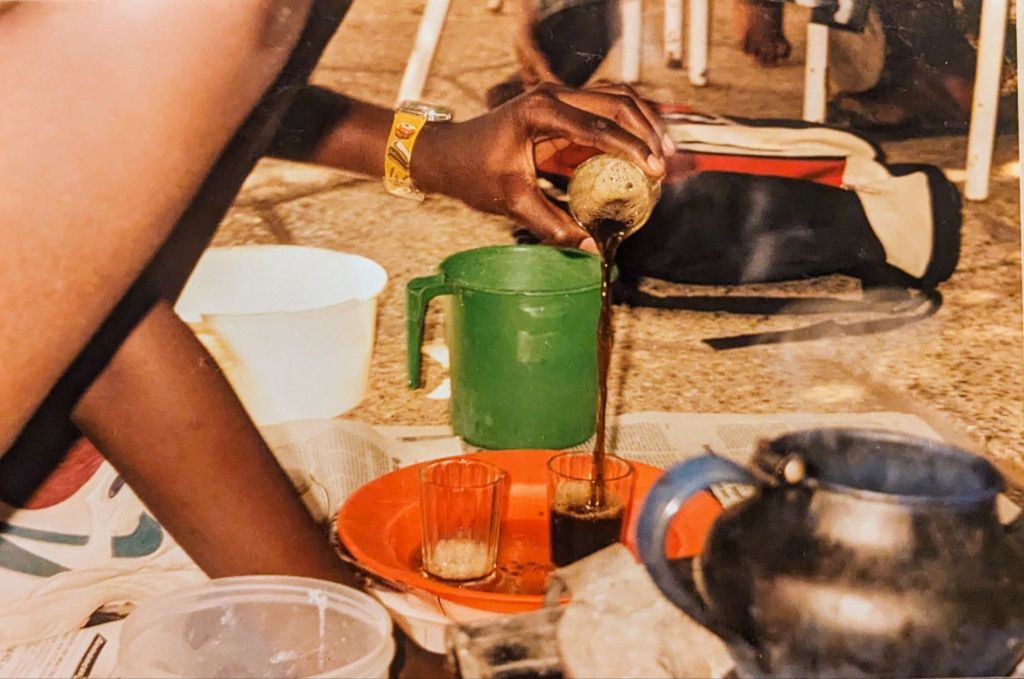
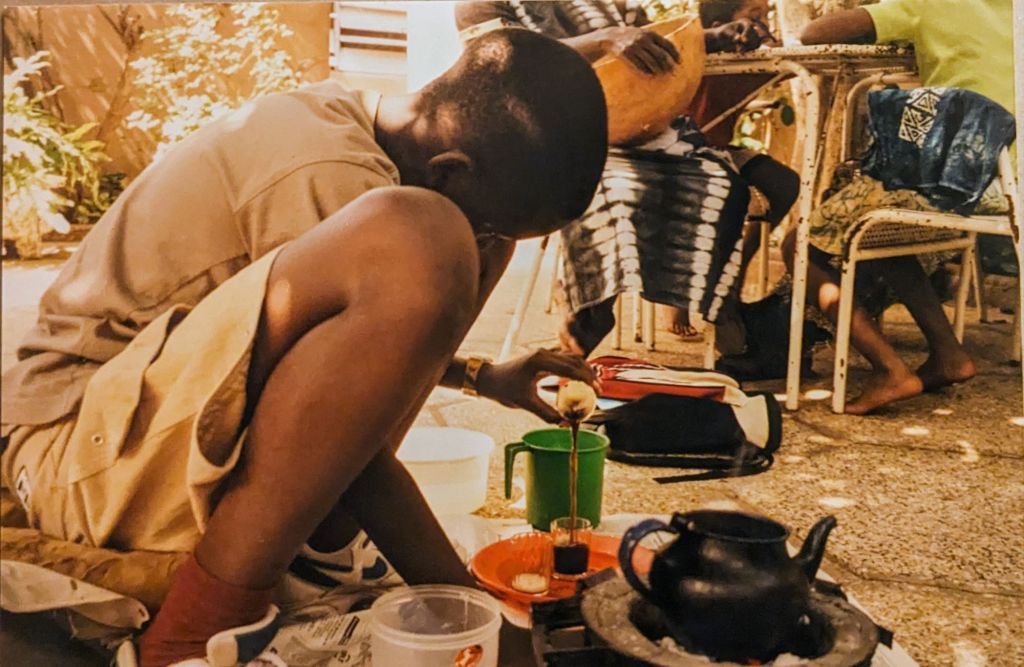
I’d like to close with the concept of “Ataya” or the three-cup ceremonial tea drinking tradition I learned about in Senegal. Ataya, which in Wolof translates to the “preparation of tea,” is an integral part of Senegalese culture. “Each cup represents the growth of friendships or the stages of life. The longer you wait for your Ataya, the stronger and sweeter friendships grow.” Whether it’s the start of a family visit or a business meeting, or even rounding a street corner on your way to the market, you can always find someone making Ataya.

Slowly, over the course of the six months I lived in Senegal, my body and spirit acclimated to slowing down and engaging in this ritual. Often sitting on cushions, friends and peers gather around a tray of small glass cups and boiling water, waiting for the tea leaves, mint and sugar to simmer. The act of pouring the tea back and forth, from cup to cup, slowly building and creating a foam lather, is a form of meditation in and of itself. You finish your tea when…you finish. Time isn’t in control. Instead, it is the tea and sweet moments of connection that call the shots.

My eyes flutter open after taking a short nap while my daughter sleeps. I take a deep breath and sigh. It is Shabbat again and I’ve given myself permission to rest and write. A sweet gift that I don’t think I will ever take for granted again since becoming a parent. I know the laundry waits. Emails are likely piling up. And I’ve got a list of errands to run and people to call back. But for right now, I will practice surrendering my time to the universe and being grateful for the early spring trees outside my window, slowly swaying in the cool wind.

The highest version of myself comes out in these moments. Her voice is quiet but I can feel her trying to speak. She’s saying, “shhh, quiet down now, just be sweet girl, resist the urge to move and do and accomplish. Your life awaits in the present moment. You have my permission to play.”

“The world has our hands, but our soul belongs to Someone Else. Six days a week we seek to dominate the world, on the seventh day we try to dominate the self.”

Rabbi Abraham Joshua Heschel
Homemade Shabbat Challah