Happy 5th Birthing Day: Reflections & Moving Forward

“Time is the coin of your life. It is the only coin you have, and only you can determine how it will be spent. Be careful lest you let other people spend it for you.”

– Carl Sandburg

When you wake up and question where the last 5 years have gone. July 11, 2020. It is the height of the Pandemic. My labor is taking a long time to kick into gear. We are not allowed to leave our hospital room, let alone the hospital. A windowless room with no guests allowed. I remember a glowing landscape and a meditation type melody playing on the TV in the room. I was in and out of a foggy haze over those next 36-72 hours, in what ultimately culminated in a complex and complicated birth.

If I’m being honest though, that was the easy part. One’s birth is supposed to be wrenching and hard. The mother is allowed to reel with fear and pain. For me though, postpartum turned out to be the bigger challenge. Over those next 12 months or so, I was scared to admit what I felt and what I didn’t feel. How was I supposed to get support from other women and moms over a screen? There were no in person “mommy and me” gatherings or classes that I could find in those days. I relied on some virtual support groups and online lactation coaching. But I pretty much felt I was on my own to process the traumatic birth and the ensuing circus.

We had a newborn. She was perfect in every way, but it would take time to find my path forward. The wee hours of the morning were sometimes the most peaceful part of the day. If I listened carefully, I could hear a buzz from the crickets outside and I had my baby in my arms, cooing and nursing. I used one (sort of) free hand to read Pachinko and sunk deeply into the present moment.

Fast forward five years and there are days now I don’t want to jinx how lucky I feel. To have this little human that our daughter has grown into. She is a blessing and a beacon of light. She laughs the biggest and boldest laugh I’ve ever heard; her giggle is contagious. I want to bottle up her desire and endless energy to sing, act, dance and make trouble all at once. Yes, I want to bottle it all up like its a glass of freshly squeezed lemonade, in hopes that it will run through my veins and come pouring out like a sweet salve on my skin.

At the same time, the last 5 years have been a bit of a blur. There are times I wasn’t sure how I was going to make it… afraid that I wasn’t cut out for this journey, this role, this excruciatingly challenging task of mothering a child into the world, as well as mothering myself, for what has often felt like the first time. No script, no one book to follow, and certainly no self-help guru could solve this new life puzzle for me. How, for example, do I soothe her tantrums and soothe the inner child within me that is scared too, scared I can’t tolerate her big feelings without exploding into a ball of nerves.

As I now look towards the next five years, I find myself reflecting on this reoccurring theme in my writing of “time and space,” and specifically “time scarcity.”

I’d be lying if I said this wasn’t an issue before my daughter was born. I can remember waking up on a Saturday in my early thirties, with the entire day ahead of me. On one hand it felt like waves coming in and out of the ocean, the day is full of possibilities. And yet through my time scarcity lens, all I could often see were a series of competing choices, all of which I wanted to try on before time ran out. And yet I remember feeling so fretful that I would either pick the “wrong choice” or that I wouldn’t have time to do all of them.

Underneath all of this angst are two competing life fears that I still grapple with most days: a fear of making a mistake and a fear of missing out. I believe deep down I have this genuine love for and curiosity for life…but it rides alongside, perhaps an existential deep knowing that we are only on this earth for so long and we must make the most of it. I see this play out in my life now, both as a forty something human and as a working mom. With even less time (ostensibly) at my disposal, I find myself asking quiet questions most mornings about how I can exercise after work and have silly 1-1 time before bed with my daughter. Do I have space to finally take a French class this year, join a book club AND take my daughter on an after school play date? I’m playing out the same scenario I did in my early 30’s, except now I’m adding in another human’s needs to the matrix. I sometimes have to remind myself to literally stop cleaning the kitchen and vacuuming so that I can pause and look at my daughter sitting in her small, black, wooden arts and crafts chair, quietly drawing a picture of Elsa and Olaf while singing a made up song to herself.

You blink an eye and you miss it.

Alas, as I look towards these next 5 years, I know we will see new challenges and hurdles arise. With the Jewish High Holidays upon us, I often see this time of year as an opportunity to reflect on what I want for myself and my family in the coming year. How can I be more intentional about the way I’m living each day, giving and receiving, breathing and believing in myself, as a mom, as a daughter, as a friend, and as a citizen on this earth? As I referenced in a recent blog, I want to lean into my mid-life years with a little more freedom, ease, and forgiveness for myself. And yet, I also want to be realistic that the way I’ve been leaning into “mid-life” up till now is and has caught up with me. I can’t “do it all.” And I certainly can’t do it “perfectly,” or as well as the “the mom across the street” is doing it.

Let it be known that in these next five years, I want to emphasize quality over quantity. I want to choose less and live into those choices more fully. I want to judge myself and my family, not against any other family’s framework or lifestyle, but against my own gut instincts about what feels right.

The scariest part of this realization is that it means I must finally come to accept that there is no “right” choice for our endless daily (and more nuanced) decisions. But if I slow down, even just 1%, and feel into the safety of my body and breath, there is a window of freedom and opportunity to leap into the matrix of it all and simply make a choice.

So as a gift to myself on this 5 year anniversary of the beginning of my birthing and mothering rollercoaster, I am choosing to step off the pressure-filled looped path that I’ve been living. The new path may be a little quieter and perhaps a little boring at times, but if I can catch a murmur of those cricket sounds along the way, then I know I’m here and I’m living. One wild and precious, messy moment at a time. Blessings for the journey dear readers. And a happy, quiet end to summer.

(*PS If you haven’t subscribed already, please do so below. It would mean a lot. Or feel free to share with someone you think would be interested in the column. Much appreciated!)

Aruba at sunset

“I pray for the change in perception that will let me see bigger and sweeter realities.”

~Anne Lamott (Help Thanks Wow: The Three Essential Prayers)

Mid-Life Musings

“Midlife is not a crisis. Midlife is an unraveling.” ~Brené Brown

I recently read this brilliant post by Brené Brown about what she describes as a “mid-life unraveling” and something struck me. Just as Brené shares that her “mid-life unraveling” hit her during her forty-first year, for me, my forty-third year has been a sort of unraveling. In fact, I think I’m still in it. I’m not sure how long it’s supposed to last or if there is a prescription for how an “unraveling” is experienced, but Brené Brown nails it with this essay. She describes her own battling it out with the Universe. Her resistance and her armor, which she’s built up over decades, is fierce and it has served her well. But at 41, she surrenders and accepts (eventually) that it’s time to let go… to let the layers shed. The layers of insanely strong and professionally manicured armor that she didn’t even realize she was wearing began to burst at the seams and prevent her from living.

I don’t think anyone has ever described this concept of a “mid-life/mid-love” chapter that I now find myself in so beautifully and yet so adjacent to fear at the same time.

In my experience, I learned at a young age, probably around 12 or 13 years old that I couldn’t share my fears. Not all of them anyways. I became astute around this time at playing into other’s vision of “cool,” what I would later look back at and see as a straight, white, cis-gendered femininity and popular girl culture that I needed to blend into in order to survive. I remember masterfully doing a sort of “code-switching,” acting one way when I was with one group of friends and then another way when I ebbed and flowed into other social spaces. For example, I remember starting 8th grade and laughing along with the “popular” kids on the bus, even when their use of the term “gay” was directed at others in a derogatory way. I just wanted to be liked. I wanted to play into the image of cool that I instinctively knew was my best shot at “survival of the fittest” and so that year I began pushing down, really far down, my own doubts, insecurities and vulnerabilities around my own sense of self and identity. My superb skills at “fitting in,” being likable and even becoming known as a sort of “peacemaker/negotiator” among friends have carried me through decades of living and growing and wandering.

I believe on many levels that I am brave and courageous and am worthy of being loved, which Brené professes so beautifully, are all of our birthrights. But until very recently I didn’t know how to shed the armor that has been covering up my ability to see that I don’t need to keep pretending and performing in order to be liked or likable.

The coping mechanisms that so many of us have developed to protect ourselves from getting hurt are keeping us small and stuck in the mud, even when we reach mid-life.

Mid-life is a scary thought. I fight like hell most days to control my surroundings so as to be able to put my feet up at the end of the day and smoke a proverbial cigar and say, “great job,” “bravo,” “you deserve to rest now…” Only to realize as I put my head on my pillow that I never actually put my feet up that day. In fact, I never stopped. Most days I am fighting an uphill battle with the Universe and I don’t think I’m winning. Instead, I am often working myself into a state of burnout, only to get up and keep fighting the same fight the next day.

For those of us who are caregivers (for children or parents, pets or neighbors, for the planet,) how do we wake up each morning and live into our most sacred truths while still making a living and playing this critical care-taker role? How do we allow ourselves to shed our armor and bask in what we really want to be doing without turning our backs on responsibility?

If I could, I would retire now and enroll in a creative writing program. Wake up and write, paint, take photos and live in nature. But alas, I can’t. I must take my dog out, feed my daughter, take her to school, rush to work and make sure bills are paid in order to wake up and do it all over again the next day. All this in a world that feels very, very fragile and chaotic and frankly scary these days.

Brené Brown shares that, “courage and daring are coursing through your veins.* You were made to live and love with your whole heart. It’s time to show up and be seen.”

*I want to know how to do this and make sure I’m not late for my 10am meeting.

I guess for now, I will just keep writing, keep asking questions and try not to be afraid of this unraveling that I find myself wanting to speak more truth to. Perhaps as Brené illustrates so well, this unraveling is a sort of re-awakening/re-birth that will hopefully allow all of us to build a new type of armor (regardless of where we are in life), an armor of courage, bravery and risk-taking that we didn’t ingest enough when we were young…When I was that 12 year old girl hiding behind myself. Instead, I will try to live into these questions and be less afraid of not being liked. I think I’ll still always be a peacemaker at heart, but I will also try to stay open to some natural conflict and internal dissent along the way. After all, humanity is imperfection. Humanity is messy.

So as we kick off the summer and celebrate Pride month, may we all wake up a bit and concoct a medicine that gets infused into the water of our young. A medicine that allows bravery, vulnerability and courage to become seeped into our bones. Perhaps armor will eventually become a thing of the past, both physical and virtual. And perhaps we will realize that love and kindness, freedom and truth are ours for the taking.

Excerpt from “The Midlife Unraveling“: “I’m not screwing around. All of this pretending and performing—these coping mechanisms that you’ve developed to protect yourself from feeling inadequate and getting hurt—has to go. Your armor is preventing you from growing into your gifts. I understand that you needed these protections when you were small. I understand that you believed your armor could help you secure all of the things you needed to feel worthy and lovable, but you’re still searching and you’re more lost than ever. Time is growing short. There are unexplored adventures ahead of you. You can’t live the rest of your life worried about what other people think. You were born worthy of love and belonging. Courage and daring are coursing through your veins. You were made to live and love with your whole heart. It’s time to show up and be seen.”

— Brené Brown (2018)

Time: The Daily Stretch to See it Anew

“Time is relative; its only worth depends upon what we do as it is passing.”

Albert Einstein

When you become immobilized in making a decision about how to spend your 1.5 hours of “free” time while your child is napping.

When it feels impossible to transition between the seemingly endless “to do’s” and resting because a voice deep inside you is screaming that you may not have “enough” time to get your “to do’s” accomplished later.

When you call the doctors office at the last minute to apologize that you’ll be running 10-15 minutes late due to traffic, but really you just couldn’t stop cleaning up the kitchen or getting in one last load of laundry before you left (referencing back to scenario 2).

The daily fight with time has been something I’ve reckoned with for what feels like forever. But when I was recently asked by a coach to think about when I first became aware of time as an oppressive phenomenon, I froze. I couldn’t remember when the plague of “time scarcity” began. Perhaps it was in college, when I found myself for the first time, living on my own and making decisions apart from my parents about how to structure and manage large blocks of time. I do remember feeling uptight about assignment deadlines and the like but when I look back on those years, it feels like time was never-ending. The days would last well into the evening, going to sleep for 2am was not uncommon and sleeping to 10am for an 11am class was the norm. No, it wasn’t then. Time flowed like honey and there was always more to be found.

I do have a distinct and sticky memory of becoming aware that time was a construct when I studied abroad in Senegal my junior year of college. I remember when one of my Senegalese professors with whom I became close, shared that in Senegal (and across Africa) there was a completely different rationalization given when people were “running late.” He explained that when a friend or colleague was “late,” it was natural to assume they were intercepted by something that was important and necessitated them taking more time. If a person was late, for example, for a rendez-vous with friends, you might assume that a sick family member needed them. In other words, you naturally gave people grace and a built in buffer. NOTHING started on time and everyone gave one another the benefit of the doubt.

More than 20 years later and with the advent of smart phones, I can’t help but wonder if the oppressiveness of “white supremacy culture” in our country has seeped in and made it that much harder to let go of a constant sense of urgency.

People have been working and raising families for millennium. How has technology become so all-encompassing and resulted in us being more tethered to time than ever before?

An irony is that I stopped wearing a watch years ago. I rely on my cell phone to monitor the day and time for me now. We have and own more things than ever before, and yet time feels scarcer than ever before.

As a “newer” parent, I’ve noticed just how many references to time fall into our vernacular when talking to our children…

“Running late,” “must be on time,” “wasting time,” “time is ticking,” “we can’t be late,” “on time is late,” “respect my time,” “time is precious.” When I catch myself using time vernacular in these contexts I try to divert myself and say something different. “It looks like you need some help before we go, let’s keep moving, or we need you to participate.” It’s fascinating and sad in a way that we superimpose our construct of time on children, who are blessed (we hope) with not needing to be fully aware of it (yet).

I remember picking up the book, Einstein’s Dreams (Alan Lightman) in my early 20’s and my mind being blown away. Lightman imagines dreams that Einstein might have had in 1905 when he was dreaming up his theory of relativity. Each dream portrays a world in which time works differently. In one world, for example, time is circular and people repeat their highs and lows over and over (not too dissimilar from the concept presented in the movie Groundhog Day, which also fascinated me at the time). In other worlds, time moves backwards and people’s journeys unfold in reverse order. This journey is also fleshed out in movie form in the film, The Curious Case of Benjamin Button. I was equally fascinated by this story and have found my mind wandering back to it over the years.

In the end, I wonder if the way we relate to time is relative to our human complex with mortality. After all, time is finite. Our days are numbered, and even if we are Benjamin Button, getting younger with time, we eventually become absorbed back into the universe. The material things we surround ourselves with, the busyness we become immersed in…might all of this be an illusion and a distraction from our fear of the inevitable?

The many colloquial expressions about time are steeped in truth. Time does move faster as we get older. Not literally, but relative to our spirits. We are more consumed with responsibility, and our bodies forget or become disillusioned with the present, even to the point of becoming disembodied. How can we fight back against this, so that we don’t blink and find ourselves looking back at years of “wasted time?”

Perhaps one helpful concept which flips time on its head is Shabbat, the Jewish day of rest. It occurs each week from sunset on Friday through sunset on Saturday, and is celebrated by Jewish communities around the world. I remember starting to incorporate it into my life spiritually and therapeutically as a graduate student. Living in Washington, DC, and swimming in a culture of political and professional networking mania, time became all-consuming. I remember finding it particularly challenging to “turn off.” I felt pressure to always be “on” or working. As part of my therapy, I began instituting certain boundaries for myself on Shabbat. Over the years, this concept has become trendy. The idea of a “technology shabbat” has been coined, but for me, it has been a lifeline to sanity.

I’ve experimented over the years with observing a form of Shabbat, from shutting down my phone to not allowing myself to check email or be on any screen. I find it is a welcome respite from the noise of the week. In fact the only day I often give myself permission to slow down enough to write creatively has been Shabbat.

How can I give myself permission to incorporate a “tech Shabbat” on other days and in other moments of the week? In the hybrid world of work we now live in, it has become even harder to create these boundaries. Access to “work” can literally be in your pocket or in your ear bud at any point in the day or night. We must reset our own priorities as no one else will do it for us.

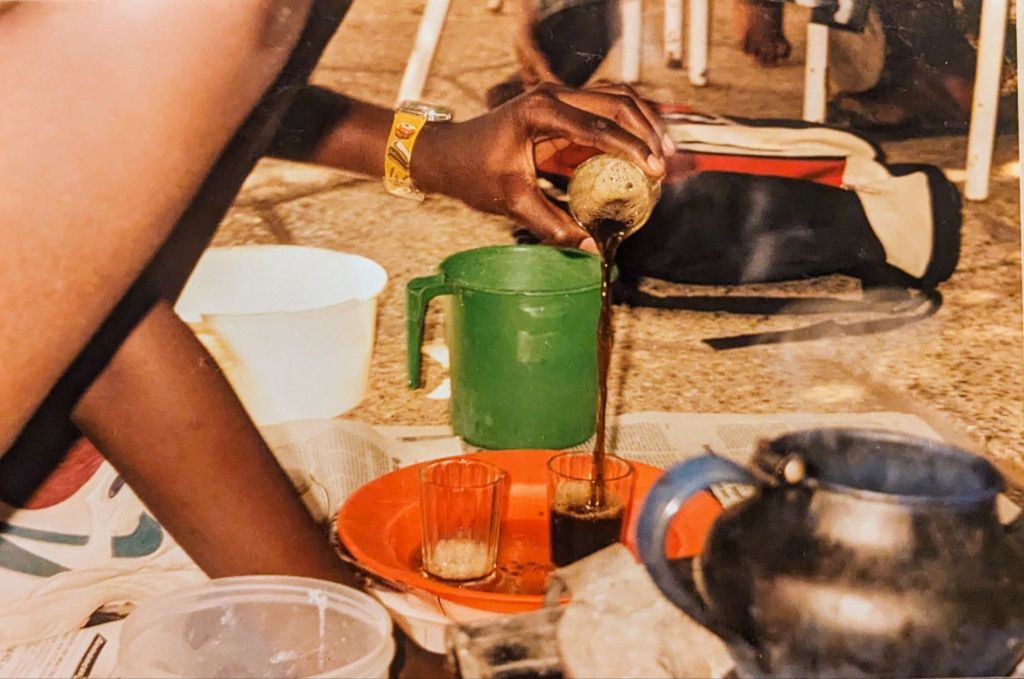
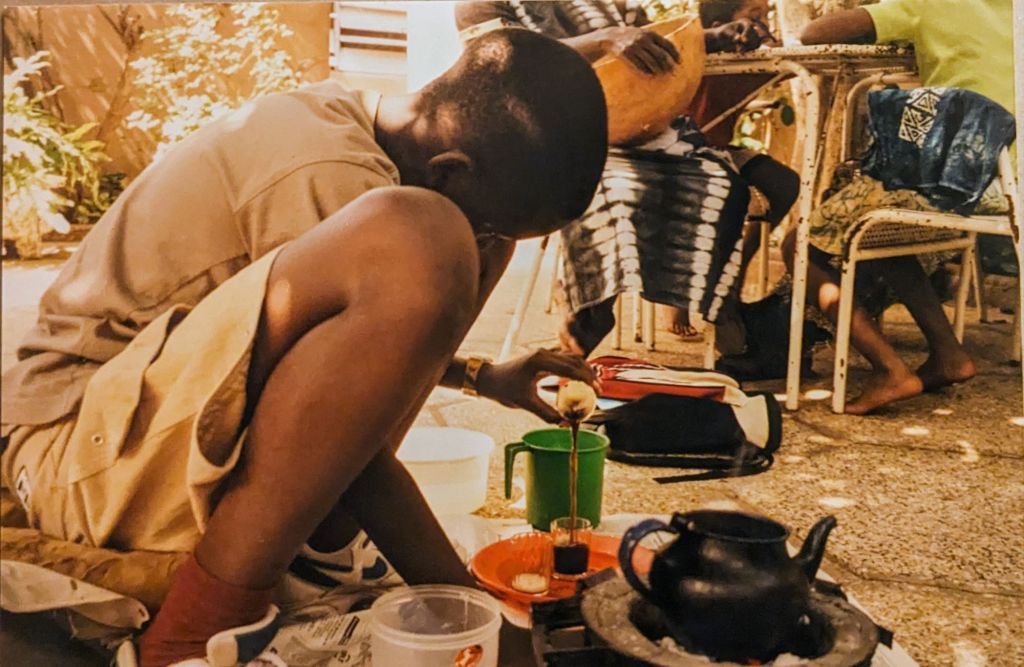
I’d like to close with the concept of “Ataya” or the three-cup ceremonial tea drinking tradition I learned about in Senegal. Ataya, which in Wolof translates to the “preparation of tea,” is an integral part of Senegalese culture. “Each cup represents the growth of friendships or the stages of life. The longer you wait for your Ataya, the stronger and sweeter friendships grow.” Whether it’s the start of a family visit or a business meeting, or even rounding a street corner on your way to the market, you can always find someone making Ataya.

Slowly, over the course of the six months I lived in Senegal, my body and spirit acclimated to slowing down and engaging in this ritual. Often sitting on cushions, friends and peers gather around a tray of small glass cups and boiling water, waiting for the tea leaves, mint and sugar to simmer. The act of pouring the tea back and forth, from cup to cup, slowly building and creating a foam lather, is a form of meditation in and of itself. You finish your tea when…you finish. Time isn’t in control. Instead, it is the tea and sweet moments of connection that call the shots.

My eyes flutter open after taking a short nap while my daughter sleeps. I take a deep breath and sigh. It is Shabbat again and I’ve given myself permission to rest and write. A sweet gift that I don’t think I will ever take for granted again since becoming a parent. I know the laundry waits. Emails are likely piling up. And I’ve got a list of errands to run and people to call back. But for right now, I will practice surrendering my time to the universe and being grateful for the early spring trees outside my window, slowly swaying in the cool wind.

The highest version of myself comes out in these moments. Her voice is quiet but I can feel her trying to speak. She’s saying, “shhh, quiet down now, just be sweet girl, resist the urge to move and do and accomplish. Your life awaits in the present moment. You have my permission to play.”

“The world has our hands, but our soul belongs to Someone Else. Six days a week we seek to dominate the world, on the seventh day we try to dominate the self.”

Rabbi Abraham Joshua Heschel
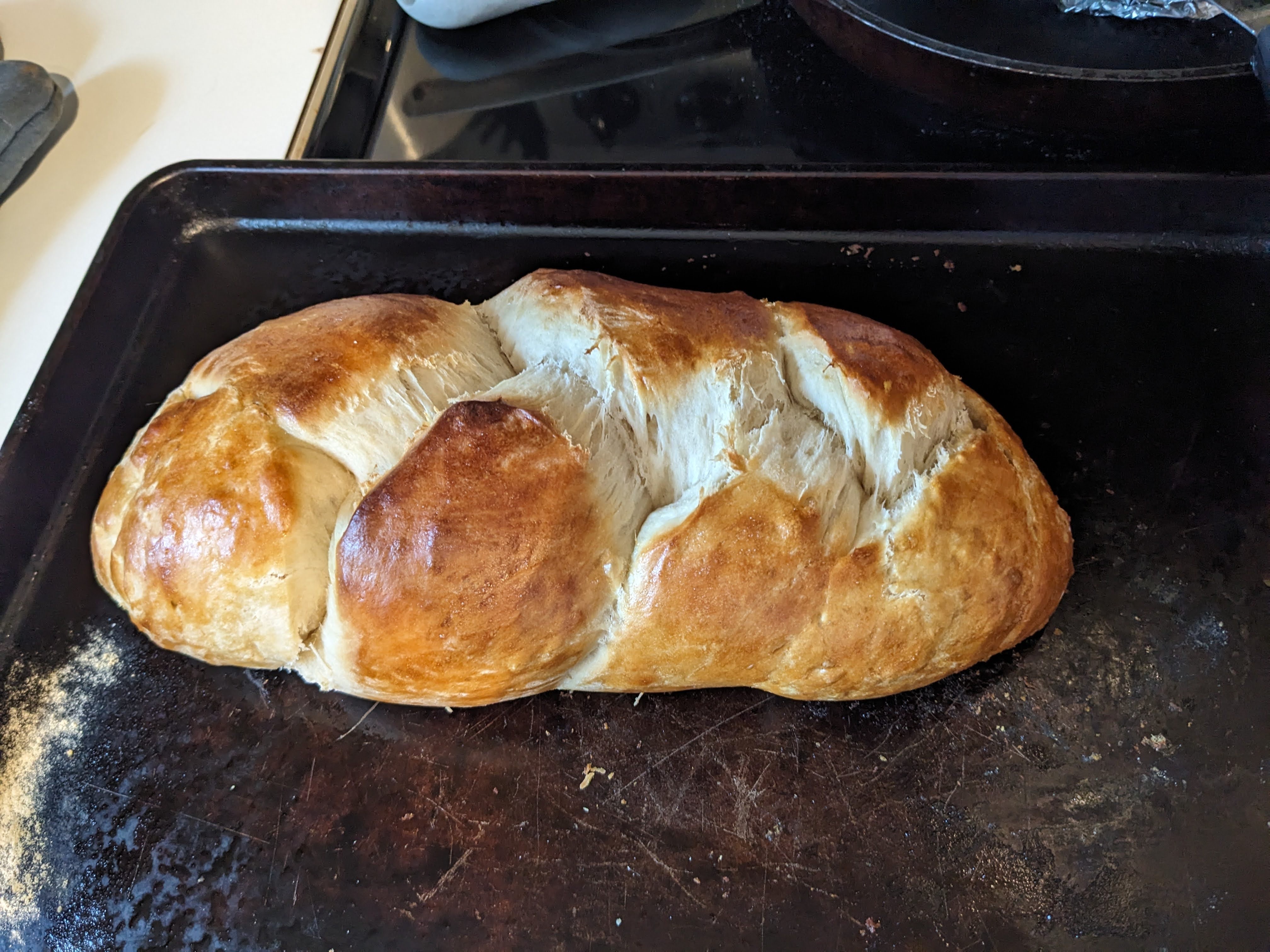
Homemade Shabbat Challah

Letting Go

“Healing may not be so much about getting better, as about letting go of everything that isn’t you- all of the expectations, all of the beliefs- and becoming who you are.

Rachel Naomi Remen, M.D.

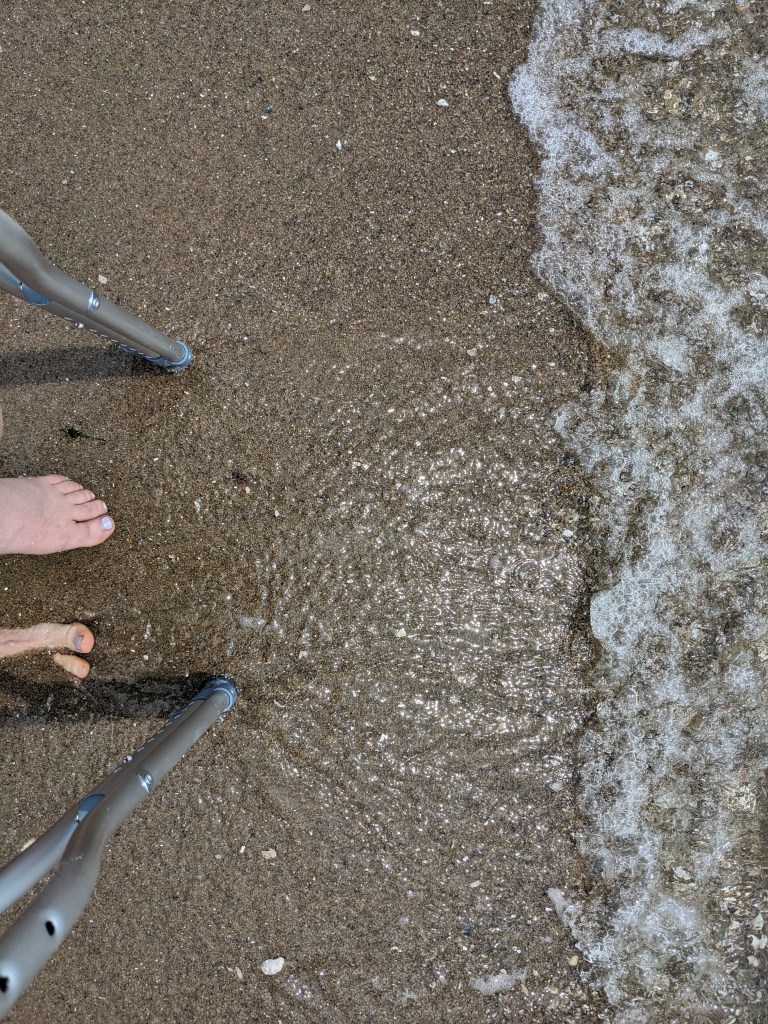
Sometimes the best thing we can do in life is to take our hands off the steering wheel and let someone else drive. There is a Yiddish expression, “Der Mensch Tracht, Un Gott Lacht,” which translates to “man plans and God laughs.” I have received a lesson in this wisdom over the last month. Less than two weeks before starting my new job, I had an absurd, freak accident which left me with a fractured ankle and what felt like an impossible situation to maneuver. Instead of planning my commute to work, I was planning a pathway to surgery and renegotiating a start date to allow for recovery. Life stopped. And the millions of little things that one moment had been in my control and seemed so important were suddenly whisked away.

Since surgery to repair my ankle, I’ve had to relearn how to go up and down the stairs. My daughter is now getting a kick out of me descending and ascending on my butt like she used to do when learning to become mobile. We are both learning to put on socks and step into shorts together. It is not straightforward. I can empathize with how tired she gets when trying to do it by herself and just wanting to give up and ask for help. Well, now we can help each other.

There have been countless lessons in this “pause” that have inconveniently inserted themselves into my life. I don’t even know where to start. For one, resisting reality or grasping for something different makes everything harder. When the Physician Assistant (PA) in the ER came in to tell me about the results of the x-ray, I was in disbelief. I started rattling off all the things I had planned for the summer and asking if I could still do them. I had plans to take my sister to NYC the next day for her 40th birthday…could we still take the train? Could I still participate in the sprint triathlon I signed up for in August? I had finally found the time to get my bike tuned up after years of it collecting dust in our garage. The PA looked at me funny and said, “well if you want to show up on the day of the race and see how you do, go for it.” (Instead my training of late has consisted of doing light ankle stretches and circles). Okay, so what about this concert or this trip or this baseball game or this adventure, etc? I immediately looked at what I was losing. Perhaps this is fair. There is a lot of loss. Not to mention, money and time and the incredible burden this places on my loved ones to pick up the slack.

But what of the gain? What do I gain from a setback?

In the last month my mind and body have slowed down, literally and figuratively. I’m not able to think much beyond what is right in front of me. At any moment I need to know where my crutches are, what I need to grab in order to sit down, whether it’s time to ice or elevate, etc. I’ve been forced to slow down in a way I didn’t think was possible, and life has not imploded. It’s gotten a bit more confusing and there are additional puzzle pieces we need to maneuver but I’m able to keep up at a pace that feels more realistic.

So what happens in a couple weeks when I can start bearing weight again, when I can commute into work or go for a walk to the mailbox? Yes even getting the mail is a formidable challenge now. Will I start piling things back on slowly, until I can’t catch my breath? Truthfully, I probably will at first. But perhaps this time I’ll connect with the ease of keeping things a bit simpler. After all, it’s not what I’m accomplishing or checking off that dictates my worth, but instead it’s in the “letting go” that I stand to gain the most. Blessings for a smooth week ahead and may you embrace the bumps and cracks along the way.

Meditation on Change

“Open the window of your mind. Allow the fresh air, new lights and new truths to enter.”

Amit Ray

Aging is a funny thing. It happens constantly. In every moment. While we are awake and while we are sleeping. Most of these moments just pass by, unnoticed. It is a natural and inevitable part of life and yet we often fight it. Or at least I fight it.

The gray hairs that start to slip through, harder to hide. Wrinkles on my face. An increase in aches and pains when I don’t work out as much. Or when I do work out. I’m growing older. Most of us don’t have too many outlets to make sense of this process. Instead we buy our way into stopping the aging process. Try this beauty service. Use this jade roller. Meditate more. Eat lighter foods. All of these recommendations on their own are perfectly reasonable and ones we could likely benefit from, but taken together, they feel overwhelming and at times counterproductive.

Our six year old Portuguese water dog, Halligan (aka Hal), was recently diagnosed with aggressive liver cancer. He was given a prognosis of about 1-2 months, if we pursue treatment. And if we don’t pursue treatment then we are looking at weeks or even days. Of course no one can say for sure and the research is spotty but either way you look at it, we have very little time left with him.

How on earth do you process something like this? One moment he’s seemingly healthy, running 2 miles in the woods with us and the next we are talking about comfort measures and how we want to talk to our toddler about mortality. (Tips on this are welcome by the way.)

As I remain hyper vigilant to Hal’s symptoms, I notice that so many of my waking hours are spent in a state of subtle scanning. I think I’m channeling my ancestors and looking for a fire to put out or a threat from neighboring tribes. I’m almost always in problem-solving mode, planning out my week ahead or doing the math on how I’m going to get to my new job on time while “lightly” guiding my daughter through her morning routine. (She’s rounding 3 years old and the concept of “threenager” feels apt.)

As I prepare to return to work full time, I’m asking myself, how did this happen again? I took the last year a half to step back and find a sense of calm and balance from the the frenzied pace I had been moving at. And, yet, if I’m being brutally honest with myself, I think I’ve recalibrated bit by bit so that I’m still following the same patterns just a little less intensely. All of these behaviors I’m sure are adaptive and in place to protect me from unseen threats. However, they are still getting in the way of me being in the here and now.

In this next phase, as I return to work, I want to reflect on what I’ve learned since “Taking a Pause” 20 months ago. In no particular order…

  • Our relationships are sacred. Our partners, our children, our parents, our colleagues, our neighbors, our friends…They are primary and deserve to be elevated above all else. No work stress or drama or inconsequential, petty argument is worth jeopardizing the connections we’ve built with those around us.
  • Parenting is hard. Full stop. Give myself grace as the journey continues to unfold.
  • When I feel cynical, which I do often, try to reframe or consider a new perspective. How am I learning, growing, and stretching through this hard thing? What is another way to look at this moment?
  • Dream. Imagine. Rest. Allow myself space for rest and creativity. Having just finished Tricia Hersey’s, Rest Is Resistance: A Manifesto, I’m moved and saddened by how consumed many of us are by “grind culture.” The oppressive nature that white supremacy and capitalism have on us is dripping in plain sight and yet we can’t see it because we’re too busy grinding away. It’s in our blood and our social makeup, but it doesn’t have to be our fate. We can resist.
  • It’s okay to not have it all figured out. Multiple times throughout the past year and a half I thought about making major career and life changes. I researched schools, ministries, organizations, yoga teacher training programs, etc. I shadowed, I prayed, I asked for answers.

And…now….I find myself returning to something very familiar, to an organization for which I worked previously. I think my search and quest for change has ironically (or not so ironically) brought me back to where I started so many years ago when I first moved up to CT.

Perhaps though, while I have come full circle in some ways, I have changed in the process. I have grown and surely aged (as is evident by my greys). And hopefully I’ve garnered a little more wisdom about what matters.

In this next chapter for myself and for all of us, may we go easy on ourselves and others. May we see the world for all its beauty and all its pain. May we stop for snuggles and cuddles and belly rubs and know the sky will not fall if we don’t send that last email. Perfectionism is dangerous and a form of violence and is perhaps the biggest threat of all to this messy and sacred process of living.

Sending love and blessings for whatever small or big steps lie ahead.

1 Year Later: Mindset Matters

“Perfection is the mountain that has no peak.”

Emma Norris

If you had told me last year I would be celebrating New Years Eve 2022 embarking on the joys of potty training I would have probably said, “that sounds like a cruel joke.”

Today we introduced our daughter to “big girl underwear.” Getting to choose among patterns including owls, mermaids, tropical fruit and trucks was a really BIG deal. In full transparency, I was dreading this process. It brings up in me all my angst around ceding control, embracing messiness (literally and figuratively) and transitions. Moreover, asking a toddler to give up a security blanket (the diaper), which is often all they have known since birth is a tall order. It’s scary and uncomfortable and not intuitive in the least. And yet, our children have to learn eventually (my older, wiser friends have promised me they won’t go to college in diapers).

As I reflect back on 2022 and what lies ahead in the new year, I continue to see my daughter and parenting as my biggest teachers. It’s been a year and counting since I started this blog. From the get go, I’ve struggled with issues of productivity and perfectionism. Through my research and writing I’ve come to see just how deep-seated these traits are in our modern culture and way of being. I touched upon this theme in one of my first blog entries, noting how tied up our sense of self-worth is with our notion of accomplishing and chasing that illusive something, whether it be a job, relationship or some idea of happiness.

Gradually, I’ve spent this last year slowing down and scaling back what is possible to produce or accomplish. Through this process I’ve recognized how habitual my “need to please” is. Whether it be through seeking validation on a parenting choice or trying to fit my life into a perfect mold of what I think it “should” look like, I continue to put increasing pressure on myself to “get it right.” Contemplating the next right move professionally, personally and spiritually consumes my thoughts most days. Making a decision about what preschool to send our daughter to next year has been like asking me to choose just one sushi roll off an entire menu. Impossible! You can’t make a perfect decision. There is no such thing and even if there was, it won’t live up to the ideal I have conjured up in my head.

At the end of the day, most of this pressure is self-imposed. We want to “do right” by our loved ones and set ourselves and them up for success. And, yet, we have to balance that idea of success with the excruciating truth that life will be hard. We will fall down, a lot. We will have “accidents” (pun intended) and there is no prescribed school or methodology that will shield us from this truth.

Perhaps then our growth comes from learning to relate differently to our pain and worries. How do we respond and react when things get hard and there is no template for how to move forward? How do we hold compassion for ourselves in the process?

Can we begin by accepting that we don’t know all the answers, nor should we? We do not need to decipher every possible outcome and algorithm when making a decision. Instead, what would it feel like to connect with humility to the messy, tangled process of living itself?

In this New Year, may a “good day” or a “good choice” be measured not by what we’ve accomplished, but instead by how we’ve related to ourselves. Did we revel in picking out the best pattern of underwear (or socks) in the morning and then remember to laugh at our bumps and “boo boos” along the way.

To all my friends and readers, happy 2023 and happy stumbling.

How Do We Protect Our Relationships?

“One of the greatest gifts we can give to the people that we love is to free them from our expectations of them.”

Meditation Teacher

I sometimes wonder how our relationships survive the act of parenting. By relationships here, I mean the relationship between a child’s parents or caregivers. Perhaps, the answer is that many of them don’t.

We don’t talk often enough about the “crushing responsibilities” that come with being a parent and how they can take a toll on the space and energy required to maintain the health of our romantic partnerships. This is not to presuppose that all co-parenting relationships look the same or have the same trajectory or expectations. With this post, I am speaking for myself and my journey which inherently look different than others. That said, I thought it might be helpful to share some of the personal challenges and vulnerabilities that have come with parenting and trying to maintain a strong foundation at home with a partner.

My wife and I met about 8 years ago through a mutual friend when I was living in New Haven, CT. She was living in a small rural town in CT and it often felt like our get togethers entailed exploring completely different cultures and terrains within the same state. Still new to New England, I was insistent on taking countless day trips to explore quaint towns, villages, cities, beaches, breweries and everything in between. It was light and fun when I stayed out of my head and just enjoyed the adventure of building a relationship with someone new.

This is not to say that building our relationship was simple or easy. We had our fair share of ups and downs. Coming out as queer was a long, arduous process that in many ways started when I was a young teenager. Having felt a bit stunted emotionally, I wasn’t comfortable or ready to start dating seriously until my late 20’s. By the time I met the woman who would become my wife I was 32, a very young 32 and still had a lot of maturing to do. I was no where near ready to settle down and had numerous hurdles to mount in order to feel ready to take that leap of faith.

Fast forward 8 years and our daughter has just passed the 20-month mark. She is a fireball, always in constant motion, exploring all the nooks and crannies of her big, wide world. It’s been an honor to be on this journey with her. At the same time, as the relationship with my daughter blossoms, I’m managing all the anxieties and stresses that come with motherhood. At times, this can become so overwhelming that I am able to see nothing else and am unable to focus on the role I play in my marriage.

In the days, weeks and months since our daughter was born — as we’ve muddled through ongoing sleep issues, a global pandemic, career changes and parenting anxieties — I am realizing that I’ve boxed myself and my wife into the role of logistics coordinators. Who is going to pick her up from daycare? Who is getting her up in the morning, doing bath time, giving meds, cleaning bottles, cooking dinner, driving her to the pediatrician’s office…the list feels endless. Resentment can so easily build up and our communication at times can look like a bidding war on who is doing more to manage our countless responsibilities. What starts as a conversation about the dishes or taking out the trash somehow devolves into an existential discussion about wanting to be seen and acknowledged for all “that we are doing.”

The truth is, everything we are “doing” can’t be assessed according to a rubric. No one is getting a grade. But we dig our heels in nonetheless and are ready to go to the ring to fight for our title as “hardest working parent, most deserving of a break.” The other day I found myself immaturely fishing for a “thank you” as if we were playing a game when I simply cleared the table after dinner.

Perhaps this is a form of #adulting that we are all immersed in, whether we have children or not. I do remember when we brought our now 5-year-old Portie (Portuguese Water Dog) home, we fell into a similar dynamic. I was more concerned with whether our dog got his paws dirty in the house, then if my partner had a good day at work. Had he been walked, fed, who was going to take him to the vet, etc.? Everything became a negotiation of sorts and communication between my wife and I centered almost exclusively around tying up loose ends at home.

I know that a lot of couples go through periods of this throughout the extent of their relationships, and some of it is to be expected.

But is there anything we can do to curb it before we start to feel more like business partners than life partners?

A couple of ideas that come to mind based on what I’ve noticed when I do manage to go against my “have to get things done” mindset…

To begin, when possible, I’m now trying to make a point to share space with our daughter, even if it feels like not a “good use” of our time. When possible, we will both give her a bath or pick her up from daycare or pile into the car for an adventure together. It may not make sense from a logistics standpoint, but it gives us a chance to breathe together as a family and create joint memories. Just this past weekend we decided to make an adventure out of a run to Target. What could have been a rushed errand to take something off our plate, was instead a full blown sensory and learning experience.

Interestingly, as a queer couple we are less subjected to traditional gender norms and heteronormative ideas around the roles we play inside and outside the home and who is doing “more” for the family. Instead of a power play, I am trying to look to our relationship as a team sport where we are both on the same team. If she is doing well, we are both doing well. And vice versa. If we are doing well as a unit, then our daughter is more likely to thrive. Admittedly, this is much easier said than done. There are so many pressures on each of us individually and it can become all too easy to slip into a contest of who is more deserving of the so-called parenting/logistics award. Perhaps it is a cry for control during a period in our lives where this kind of mastery feels more fraught than ever.

Additionally, I’ve realized how important it is to cultivate excitement around joint ventures and activities outside the parenting role. What is it that we can plan together, even if it seems lightyears away? (I already started daydreaming about a hypothetical winter 2023 getaway). I want to hold more tightly to those small moments of connection. Can we stay up past our bedtime to watch an extra episode of bad TV or meet up for a secret rendezvous at Chipotle for lunch? Perhaps these moments are not as sexy as our honeymoon period adventures, but they are just as meaningful.

As always, I am very much in the thick of this unchartered territory and open to the experience and wisdom of others. Above all I want to make more of an effort to give myself and my partner grace when one of us is stressed or overwhelmed. After all, what drew us to each other all those years ago at an ordinary bar in New Haven was our zest for life and adventure. Business and parenting logistics have their role, but perhaps letting go of some of these expectations and embracing “messy” will take us further in the end.

Glass is half…

Let the splash of colors in the setting sun remind you, at the end of it all, you have permission to be undone here.

Morgan Harper Nichols
Photo by Artem Lysenko on Pexels.com

The other day my daughter discovered she could climb up onto our black Ikea recliner chair. She would climb up, turn around, sit back down and slowly slither off the chair, only to repeat the same thing probably 20 more times over the next 20 minutes. I was in awe of her discovery and so proud of her for having the courage to flex this muscle. She was mesmerized by her newfound skill and this sense of wonder trickled out to every corner of the room.

In the short month that I’ve been home from work I’ve had several insights. One glaring insight which I’ve known to be true for countless years but am only just now starting to see more clearly is my tendency to focus on productivity. I am a hopeless perfectionist, always looking to identify what’s missing, what I have yet to accomplish, what is one more thing I can get done before the timer goes off. Not working in the traditional sense, over the last month it has become painfully obvious just how much I’ve valued productivity as a marker of my self-worth. Even though I no longer have a task list in Outlook that I’m monitoring, I can feel myself fighting the urge to fill every moment of the day with something worthwhile.

I’ve been listening to a book on Audible called Laziness Does Not Exist, by social psychologist, Dr. Devon Price. In it, Price provides a social and historical backdrop for how humans have come to see productivity and overachieving as a measure of self-worth. Through interviews, research and personal stories, Price explains that people today work far more than nearly any other humans in history. And yet, we often still feel we are not doing enough and we are not good enough.

In the months immediately after our daughter was born, when my wife and I were caring for her around the clock, I lamented often that I was getting “nothing” done. Laundry would pile up, the house unraveled, any form of exercise took a backseat. I struggled to find time to even return a phone call. I started obsessing over how many thank you notes I was able to churn out in a given day. Even putting a stamp and address on an envelope felt gratifying. In spite of the fact that we were literally keeping a tiny human being alive, I was grasping for what more I could do to feel productive. Taking a nap was hard. It meant I was losing precious hours in the day. I was a walking, breathing zombie but my internal task master persona was screaming from within.

Today, as my daughter rounds the 18 month mark, I am starting to realize I may have had it all wrong the past 20+ years I’ve been working. I can see now that I have been running on a false “high” in chasing my email inbox and to-do list every day.

I still have a deep yearning to check things off my personal to do list (returning calls, bills, chores, sending out the infamous thank you note). I am often carrying around a subtle sense of guilt and even shame for not “producing” enough. One friend likened this new space that I’m in to a period of detox. Amidst the fog I can start to see and feel what happens when I don’t count the seconds of productivity in each moment of the day.

My daughter continues to test her boundaries. Whether transforming an Ikea chair into a slide or dropping food onto the floor and then cracking up, she has a way of making time stand still.

May the color she brings to my life and the lessons she continues to teach me every day about slowing down guide me in the unfolding and unraveling of this need to produce and fill time with such precision. As Morgan Harper Nichols quotes, “…the permission to be undone here.”