Here or Nowhere

“Have patience with everything that remains unsolved in your heart. Try to love the questions themselves, like locked rooms and like books written in a foreign language…Perhaps then, someday far in the future, you will gradually, without even noticing it, live your way into the answer.

Rainer Maria Rilke
Shelburne Falls, MA
Shelburne Falls, MA

I picked up a book recently from a hospital Chaplain’s library called Here or Nowhere. The Chaplain who has become a mentor to me, told me to pick any book I wanted from her bookshelf to borrow. The small dusty copy of Here or Nowhere by Renée Hermanson (1984) caught my eye. It was a simple quote on the back cover that stood out. Hermanson, writing from a Christian perspective and weaving in biblical figures to help her unpack “middle age” and all its meaning, writes, “I spent many years waiting–for time to go back to school, for the children to grow up, for our finances to get better–and then discovered time was not waiting, but marching on. I believe we need to be reminded that, as Thomas Carlyle said, our ideal is here or nowhere. We must find God in our lives and our lives in God wherever and whenever we are.”

The search for meaning and a sense of “arrival” seem to be timeless inquiries. From biblical times through the present, we are all searching, looking for answers to life’s big questions. Why are we here? What is intended for us? What is God or the world or the universe waiting for us to realize and manifest? I’ve been fighting with myself lately around these questions. I’ve been asking myself, do I want to go back to school and pursue another degree or credential? I’ve been pondering a leadership path that weaves through religion and the spiritual. I’ve also been hit with the reality that I need to focus on a new job search, to secure a full/ “fuller” time position that will give my family some more breathing room and sustenance. While just a short year ago, I thought the answer was to leave my job to find more breathing room and be home with our young daughter, now I need to reverse the cycle and work more hours. Such is the ebb and flow of life.

There is a pending fear and excitement all at the same time about the prospect of more change ahead. There is a part of me that I think will always yearn for change and new opportunities to break free from what feels like the mundane and ordinary. I’ve realized I’m chasing something that is always going to be a step (or miles) in front of me unless I change my perspective. I risk now sinking back into the “if only” syndrome of my 20’s and 30’s. If only I had a partner, if only I was settled down, if only I had a child, etc. etc. But when that elusive “if only” becomes a reality, your dreams just morph into something further away.

How can I find wisdom and answers right here in the now, without trying to search for them? How can I release the pressure to keep searching and at the same time remain a seeker and stay curious?

I recently watched the movie, Women Talking (2022), produced by Sarah Polley. It chronicles a two-day period in which women from an isolated Mennonite community grapple with the decision of whether or not to stay and fight their attackers or leave their community. It is a profound depiction of women at their strongest and weakest moments, scared out of their minds about the violence (sexual, physical, and emotional) their children might face. I was struck by the character of Ona (played by Mara Rooney) who is sometimes teased for being too lofty or imaginative in her ideals. She allows herself to dream and float above the horrors her community has endured and imagine a better world for herself and her children. She is at the same time grounded in what’s real and what’s looming if the women don’t act and make a decision. In the end, when they have every reason to give up on their faith in God, the women lean further into their faith. As one female character wisely states, they must look further out into the distance beyond what is right in front of them (in an analogy to how she steadies her horses when riding her buggy).

I also recently finished re-reading the book, The Red Tent by Anita Diamant (2007). It depicts the biblical character, Dinah who is Leah and Jacobs’s only daughter. Dinah is merely a footnote in the bible, depicted as a victim to a violent crime and sandwiched between the stories of her iconic father, Jacob and her powerful brother, Joseph. Her voice enraptures me and carries me back into Canaan and the land of my ancestors. I am struck by the lives the women lead, anchored in many ways by the “red tent” which is where they gather each month during their menstrual cycles. In the tent, they talk and dream and lament. They share their wisdom and woes and build meaning through their stories. The women are apart from the men in their community during this 3 day period each month. The men are forbidden to enter in fact. Similar to the secluded barn haystacks upon which the women sit in Women Talking (set in 2010), Dinah and her mothers gather strength from one another to go back out and face the world.

On the cusp of another spring and in honor of International Women’s Day, I am reminded that perhaps we can gather wisdom from the strong female figures of our past to make tough decisions. Can characters like Dinah and Ona who aren’t afraid to dream big in the face of incredible obstacles, inspire me to do the same? Perhaps big (and even small) decisions are not meant to be made in isolation, alone in the quiet of our minds, but instead in community with our sisters, mothers and family members of generations past. In this spirit and in the red tents of our futures, may we lean into one another’s collective wisdom to emerge stronger and refreshed for the journey ahead, knowing that here and beyond are often where the magic happens.
1 Year Later: Mindset Matters

“Perfection is the mountain that has no peak.”

Emma Norris

If you had told me last year I would be celebrating New Years Eve 2022 embarking on the joys of potty training I would have probably said, “that sounds like a cruel joke.”

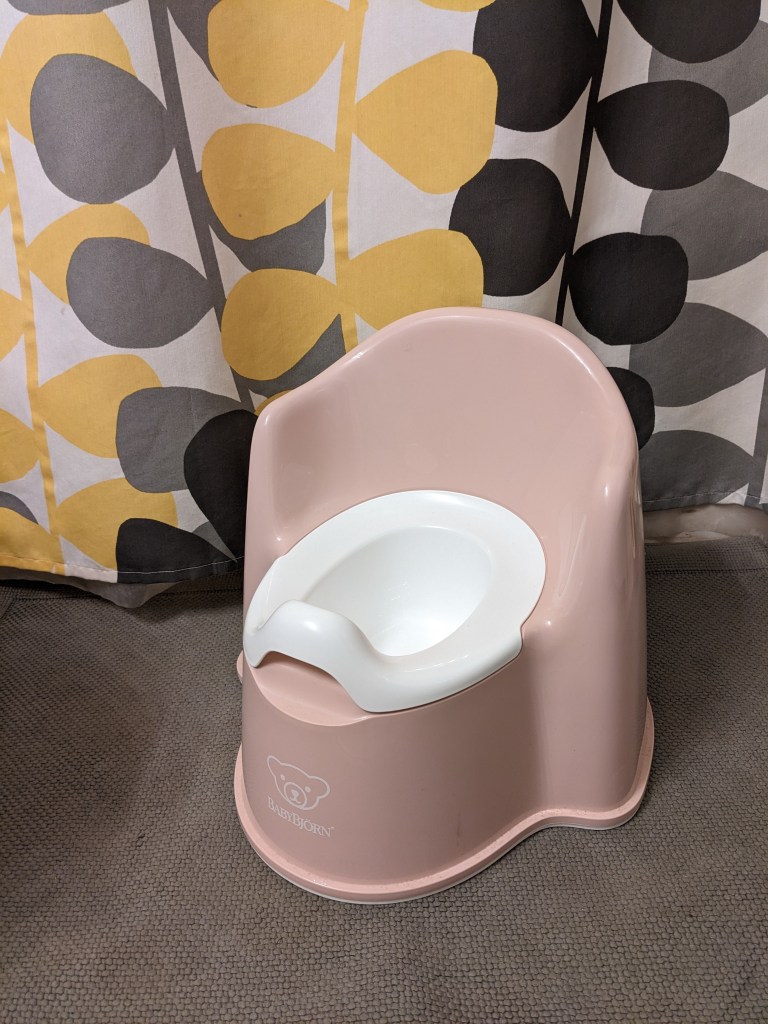
Today we introduced our daughter to “big girl underwear.” Getting to choose among patterns including owls, mermaids, tropical fruit and trucks was a really BIG deal. In full transparency, I was dreading this process. It brings up in me all my angst around ceding control, embracing messiness (literally and figuratively) and transitions. Moreover, asking a toddler to give up a security blanket (the diaper), which is often all they have known since birth is a tall order. It’s scary and uncomfortable and not intuitive in the least. And yet, our children have to learn eventually (my older, wiser friends have promised me they won’t go to college in diapers).

As I reflect back on 2022 and what lies ahead in the new year, I continue to see my daughter and parenting as my biggest teachers. It’s been a year and counting since I started this blog. From the get go, I’ve struggled with issues of productivity and perfectionism. Through my research and writing I’ve come to see just how deep-seated these traits are in our modern culture and way of being. I touched upon this theme in one of my first blog entries, noting how tied up our sense of self-worth is with our notion of accomplishing and chasing that illusive something, whether it be a job, relationship or some idea of happiness.

Gradually, I’ve spent this last year slowing down and scaling back what is possible to produce or accomplish. Through this process I’ve recognized how habitual my “need to please” is. Whether it be through seeking validation on a parenting choice or trying to fit my life into a perfect mold of what I think it “should” look like, I continue to put increasing pressure on myself to “get it right.” Contemplating the next right move professionally, personally and spiritually consumes my thoughts most days. Making a decision about what preschool to send our daughter to next year has been like asking me to choose just one sushi roll off an entire menu. Impossible! You can’t make a perfect decision. There is no such thing and even if there was, it won’t live up to the ideal I have conjured up in my head.

At the end of the day, most of this pressure is self-imposed. We want to “do right” by our loved ones and set ourselves and them up for success. And, yet, we have to balance that idea of success with the excruciating truth that life will be hard. We will fall down, a lot. We will have “accidents” (pun intended) and there is no prescribed school or methodology that will shield us from this truth.

Perhaps then our growth comes from learning to relate differently to our pain and worries. How do we respond and react when things get hard and there is no template for how to move forward? How do we hold compassion for ourselves in the process?

Can we begin by accepting that we don’t know all the answers, nor should we? We do not need to decipher every possible outcome and algorithm when making a decision. Instead, what would it feel like to connect with humility to the messy, tangled process of living itself?

In this New Year, may a “good day” or a “good choice” be measured not by what we’ve accomplished, but instead by how we’ve related to ourselves. Did we revel in picking out the best pattern of underwear (or socks) in the morning and then remember to laugh at our bumps and “boo boos” along the way.

To all my friends and readers, happy 2023 and happy stumbling.

Note to Myself: Reflection on Parenting

“What would it be like if I could accept life – accept this moment – exactly as it is?”

Tara Brach

Dear Momma,


This wasn’t about you or your parenting in any way. Your daughter is fine. You are learning alongside her.


You got her tickets to see Laurie Berkner perform live in Hartford, CT. Her favorite artist! You blocked off the day. You carved out precious time for your family. You agreed not to invite anyone else so this could be a true family outing. It was just her, Mommy and Ima. You made every contingency plan necessary, got everyone out the door in enough time. Checklist–snack, diapers, hands, face, teeth, shoes and socks. And managed to get another pair of pants and socks on when the first pair got wet from stepping in your dog’s water bowl.


You bought these tickets months ago and were thrilled to give this experience to her. As a gift, a memory she would never forget.


And yet, when we settle into our seats and you look around, you can tell she seems unsettled. Maybe overwhelmed? Unsure what to make of her surroundings? A baby born during the pandemic, this is possibly one of the largest crowds she’s been around.


Laurie comes dancing down the aisle with her guitar and sings a familiar tune… “When I woke up today…I shouted out Hooray!…” My eyes light up and my ears can’t believe what they are hearing. Is it really her? Live, in the flesh? Strumming her guitar 20 feet away. Unbelievable.


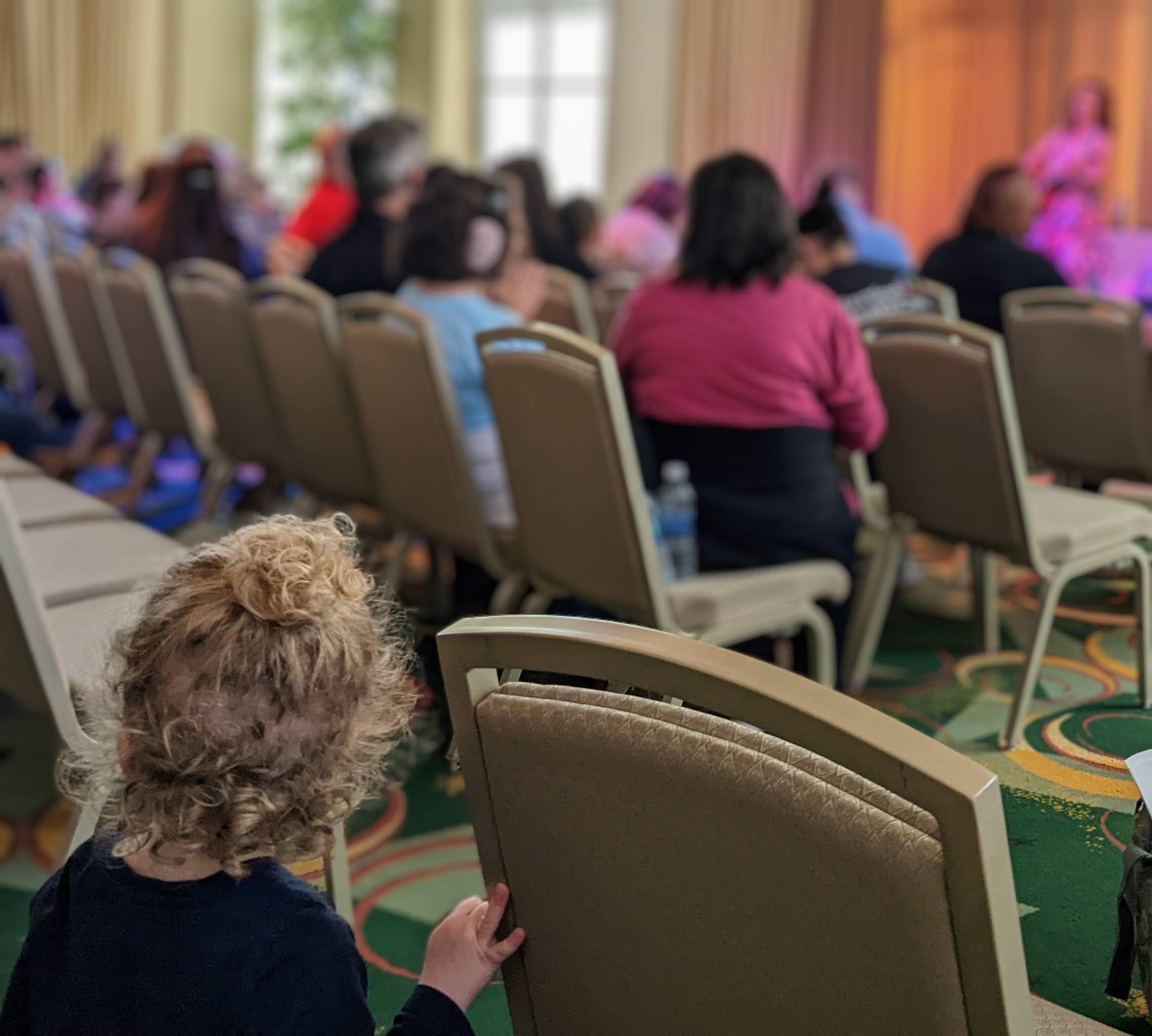
I glance over and see my daughter melting to the ground. Shrinking into a cocoon. Eyes glazed over, lying on the floor, attempting to do a summersault in the aisle and trying to get away. She seems somewhere else. She doesn’t know what to make of it perhaps? Looks out at Laurie a few times and tries to take it all in, but then retreats again. Too much? Tired? Hungry? Cautious? Worried? I may never know.


Maybe she is unable to express how unbelievably strange it is to see this icon live, a blink of an eye away, after only seeing her on a screen or dancing to her music on Pandora. Yes, Laurie Berkner is real. She’s a person too.


I’m so incredibly disappointed in that moment. Yet, in reflecting back, I realize that as much as much as I want my daughter to fall in love with Laurie Berkner in concert, to jump up and down to “Chipmunk at the Gas Pump,” like the other kids, that’s simply not what she is feeling today. She is being her authentic self.

Perhaps to be accepting of my own thoughts, feelings and actions is an admirable goal for myself too. To share our emotions with our children and allow them to share theirs with us. And to be validating and at peace with the “let downs” and inevitable perplexities and complexities of childhood and parenting that will come.

—–

A few weeks later, this experience helps me stay much more grounded on Halloween night when my daughter refuses(!) to put on her Halloween green dinosaur costume to go trick-or-treating. She has been talking about this costume for weeks and practically every day leading up to Halloween. And yet, when push comes to shove, she decides that she doesn’t want to wear her costume and instead prefers to walk around the neighborhood and simply ask for candy.

Yet, what starts off as another huge “wait, you have to like this” (oh, what did I do wrong?) moment ends with a renewed appreciation for my child’s intuition. We must trust them, to know what’s best for them and find ways to trust ourselves in the process too.

Ultimately, my daughter decides that instead of wearing her dinosaur costume for Halloween she is going to cart it around the whole night in her blue car. It will go trick-or-treating with her!

Thank goodness for children’s creative spirts and our ongoing practice as adults to stretch — and be true to ourselves — alongside them.

A Role Model in Brandi

The midwife told us that we each needed a mantra for every time the world of motherhood felt like it was a template that we didn’t fit into. Mine was ‘I am the mother of Evangeline.'”

Brandi Carlile, Broken Horses

It’s not often I become intoxicated by someone’s voice, just listening to them speak. I recently finished listening to Brandi Carlile’s new Memoir, Broken Horses. From start to finish I was mesmerized and transfixed by her words and songs, woven together to tell the story of her life, thus far.

Brandi and I share the same age (both born in 1981). While our upbringings could not have looked more different, our inner journeys bear striking similarities. Brandi grew up in a rural town outside Seattle, Washington. She moves 14 times in her first 14 years. Brandi’s family was rich with love and poor with means. She drops out of high school in order to pursue a career in music, almost exclusively self-taught. Brandi is gifted beyond imagination and will eventually catch national attention and go on to become the most nominated woman at the 61st Annual Grammy Awards in 2019. Beyond her musical talent though, I think what enraptures me is her raw truth and gift for storytelling.

Like me, Brandi grows up in the ’90’s. There are no cell phones for us in middle school or high school. We are taunted by our own inner critics more than we are by social media. Bullying is alive and well but it is easier to retreat into our own spaces and hide from the scrolling and obsessive jeering that comes from toxic online commentary. At the same time, we don’t have many public role models when it comes to the queer community. For Brandi, Ellen DeGeneres is monumental. Ellen’s “coming out episode” airs on April 30, 1997 when Brandi and I are 16. Ellen is the first gay person Brandi ever “meets” and she gives her the confidence to come out in high school. She secretly records Ellen’s “coming out episode” on a cassette tape and years later she ironically has Ellen sign it while she is a guest on her show.

I am far from ready to “come out” in 1997 but I do subconsciously archive this moment in my memory bank, which over the next 6 or 7 years will give me the confidence to do the same. It’s funny because even today at 40, listening to Brandi speak so openly about her queer identity and life as an artist, it feels like she is speaking to me at 16 years old. She is giving my 16 year-old self permission to break free from her shell just a littler earlier.

Likewise, it is so powerful to hear Brandi share her story of meeting the woman who would become her wife and their journey starting a family. It normalizes these life-cycle moments in a queer context and again speaks to my younger self, giving her permission to keep moving forward, and with the message that she is not alone. Brandi describes in detail how she and her wife, Catherine Carlile, navigate nuanced decisions around fertility, pregnancy, gender roles, conceptions of motherhood, and parenting in a heteronormative world. Her writing and storytelling is brave, fierce and ground-breaking. One storyline that stands out to me is in Chapter 15, “Firewatcher’s Daughter.” During this segment, Brandi speaks openly about the confusion and “irreconcilable grief” that she experiences as the non child-bearing partner and mother who is relegated to an insubordinate role during childbirth classes. She starts developing a complex in what is a heteronormative structure that boxes “LGBTQ couples into a male-female role paradigm that inevitably makes us feel more alone”. Brandi feels “useless and humiliated” by these classes. She is a mother but feels like she needs someone to reassure her of that.

Brandi gives voice to the truth that same-sex parenting is still relatively new and that society needs to humanize these stories because history is happening all around us. She and Catherine ultimately find a new midwife who specializes in “diverse pregnancy situations” and who works with them through the remainder of their pregnancy. In another poignant scene, the midwife challenges them to each develop a mantra for every time they feel shut out of motherhood as they see it. Brandi chooses the mantra, “I am the mother of Evangeline,” (the name of their first daughter) and this lyric will go on to become the anchor of her song, “The Mother” which depicts the role of a mother through her eyes.

Brandi’s parenting story, while unique, bears a familiar resemblance to my own. While I do carry my daughter, there is a feeling that I still have to prove myself worthy as a parent and a mother. It’s a never-ending coming out process when I share that my daughter has two moms. There isn’t a great template for us (which in some ways is liberating) and we are figuring it out as we go. We struggle with all the same issues that I imagine most couples face when it comes to division of labor, paid work vs unpaid work and the need to feel validated and appreciated for our contributions. What’s refreshing is that Brandi gives voice to a community of burgeoning LGBTQ+ parents who are yearning to see and be seen. We are here and we will continue to “pave our own way,” one spilled milk bottle at a time.

In the meantime, as a nod to Rosh Hashanah and a New Year’s sermon of sorts, I want to thank Brandi Carlile for awakening something in me that needed to be poked. From her courage to speak so openly about her life, to her creative and beautiful storytelling, I am inspired to keep writing and sharing my voice into the new year. So in that spirit, may this be a year for us all of pushing our creative boundaries and sharing our stories with a little more tenacity and grit than before. L’Shanah Tovah.

My Ordinary “This is Us”

“Joy comes to us in ordinary moments. We risk missing out when we get too busy chasing down the extraordinary.”

Brene Brown

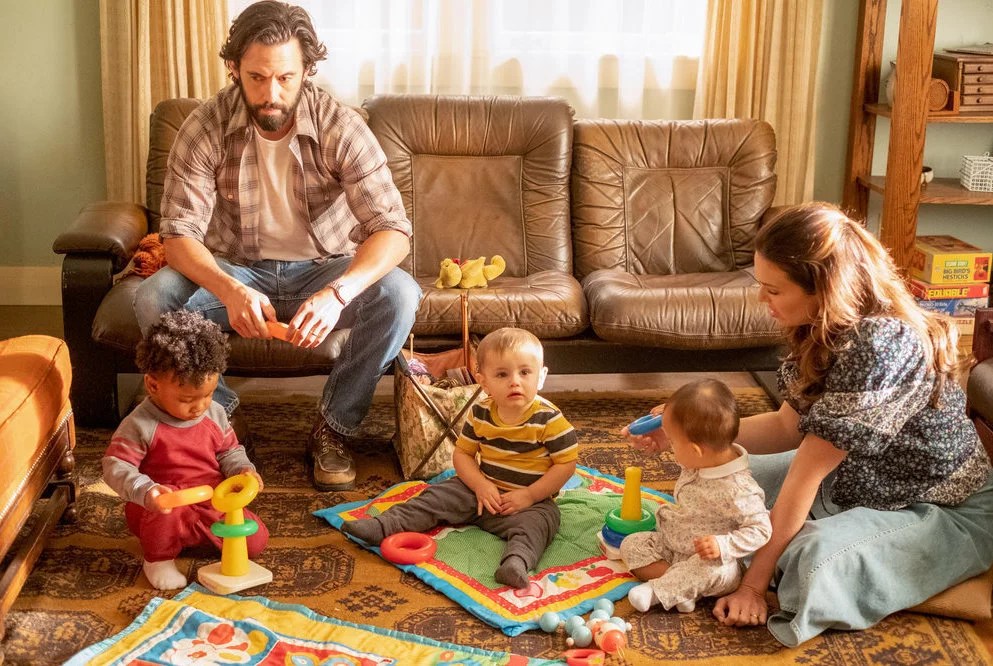
I know I’m a bit behind, but it’s still hard for me to accept that the show, This is Us wrapped its final season. For six years, beginning in 2016, I followed members of the Pearson Family (namely twins, Kate and Kevin, adopted son Randall, along with mom, Rebecca, and dad, Jack) along circuitous life journeys that played into every possible emotion and scenario a young family could experience.

What makes this show especially unique is that it slips back and forth in time, showing the characters at different ages and in different years within each episode. Over the six seasons, you get to know the characters in real time as they age and grow, experience major set backs, and then get back up on their feet and plow forward. Creator, Dan Fogelman, along with his brilliant writers and producers, weave together stories that pull on every heart string you’ve got while telling powerful truths.

I guess I have a thing for family dramas, particularly ones that highlight imperfect characters, in whom I can see myself and those who so honestly reflect the world we are living in. NPR’s Eric Deggans sums it up perfectly, “In other words, the drama on This Is Us comes from small moments between characters living everyday lives.”

As a way of framing this post, I want to clarify that I’m not attempting to write a formal review or critique of the show. I’ll leave that to the experts! Instead, I want to share a few themes and narratives that were particularly resonant with me and my current roles as mom, wife, daughter, sister… trying to navigate life the best I can. I see this post as an homage really, to a show that has made such an imprint on my heart during a time when I needed its company.

The season finale, which aired on May 24, 2022 largely centered around an ordinary Saturday when the siblings are in their pre-teen years, living in the suburbs outside of Pittsburgh. When their plans are canceled at the last minute, they find themselves with an entire day with nothing scheduled. Mom and Dad are thrilled at the prospect of a quiet day and two of the three kids are bored out of their minds. Kevin and Randall sit on the couch checked out, making fun of their sister, Kate, who genuinely wants to spend time with her family. Kate has proposed a litany of family pastimes to keep them busy– puzzles, watching old videos, and playing an old pin the tail on the donkey game found on a bookshelf.

And what starts as an awkward “forced family fun” day turns out to serve as a microcosm for what the entire show is built on…appreciating the small moments, while they are happening. Little do the kids know, but just a few years later, their father (Jack) will suffer a fatal heart attack after a brutal house fire in the middle of the night. Jack will live on as a hero within them for decades to come and inform many of their life decisions but they will never have those small, fleeting moments back.

My wife and I recently decided to forego a 3 day exotic family camping trip we had planned months earlier and instead settled on a 3 day staycation. On a rainy summer Wednesday we trek up to Mystic, CT, to visit the aquarium. Our daughter revels at the Beluga whales and the proud penguins while her eyes loom large over whiskered sea lions and voluminous sea turtles. Before heading home we stop at a diner off the highway and order two salads and a grilled cheese. Our daughter is thrilled to hear that her lunch is accompanied by a complimentary ice cream scoop, which she mostly gobbles up and refuses to let us taste (we are still working on sharing).

It is such an ‘ordinary’ day, and, yet, as I write this post and think back to sitting at this nondescript diner I realize that, this is it…short, sweet, simple moments of connection.

Rebecca, the mother and matriarch on This is Us looms larger than life and serves as the anchor throughout the series. Like everyone else, she is imperfect, human and trying to figure things out along the way. She carries her family through endless trials including Jack’s death and raises three beautiful humans who go on to do the same for their families (the show seamlessly spans 4 generations). Rebecca and the entire family get thrown another curve ball mid-way through the series with her diagnosis of early onset Alzheimer’s. This curveball, although devastating, ultimately heightens the everyday themes of time, space and memories in beautiful and unexpected ways throughout the remaining seasons.

As Rebecca’s disease progresses ever so slowly at first and then more quickly towards the end of the series, I find myself floating back and forth in time in my life as well. While devouring the show each week, I can’t stop asking myself, what really matters? When my life and all the people in it are one day laid out before me as they are for Rebecca in a final metaphoric scene that takes place in an old-fashioned train car, how will I feel, what will I be thinking, what will I be regretting, what will I be most proud of?

Within this melancholy scene that parallels Rebecca’s final moments in life, I am smiling through my tears. I may have to flex a muscle, but in doing so I can see that it is within my power to stop grasping for things to be different. Like the Pearsons’, my life is messy and filled with ups and downs, regrets and yearnings. I may not have the next chapter (or two or three) figured out but neither did Randall, Kate, Kevin, Rebecca or Jack. Their lives are messy, filled with pain and loss, but they have one another. And that is more than enough.

As a closing thought, may we all lean into the ‘ordinary’ days and moments–and the people who fill them–and appreciate knowing that often, this is it.

Seeing Burnout with New Glasses

“Shouting ‘self-care’ at people who actually need community care is how we fail them.”  

Nakita Valerio

Some days I still wake up and ask myself, how did I get here?

It’s been over 6 months since I left my full time job and yet if I close my eyes I can still feel that gripping sense of isolation, fear and exhaustion that I was living in for too long. It was a feeling of being stuck inside a toaster machine, being burnt on both sides and yet not sure if anyone could see me. There was a smell of burnt toast in the air but it was one that we were all breathing in and so it just felt normal.

Most days I told myself the answer was to actually work harder. I preferred to spend a few extra minutes responding to emails and to stay another hour in the office after everyone left to soak up the quiet, uninterrupted time. I reveled in the moment that I could pop online late at night or on a weekend and “get ahead” of the next day/week without the sinking feeling that “to dos” were simultaneously compounding in my inbox.

And believe it or not, this worked for a while. My excessive drive to perform was fueled by the immediate satisfaction I received when a colleague would respond late at night to thank me for my hard work or when I was able to climb the proverbial ladder of adding the word “Assistant,” “Associate,” and then…drum roll…. “Director” to my title. Perhaps I was on track to something great. But inside I felt completely beholden to a cycle that wasn’t actually getting me anywhere. I was on a track headed towards burnout and was unable to see clearly what was falling apart around me.

Six months later and I am still that same person inside. As I’ve written about in previous posts, I still hear on a daily basis that same inner voice lamenting that I’m not doing enough, not accomplishing enough and not worthy of praise or validation. I have, however, noticed a few stark differences in my mindset day to day.

One is that I’m less attached to labels than I once was. I remember going to a conference in between jobs about 10 years ago and feeling mortified that I had no larger company affiliation on my name tag. I think I had written “Higher Education Professional” under my name but not having a specific university or organization to back me up left me feeling extremely self-conscious. It felt wildly taboo and in many ways confusing to not have my identity tied to a job, profession or employer. I felt exposed and almost desperate to land a position so I could cling to an identifier.

Fast-forward 10+ years and now we finally have language for those individuals who are intentionally choosing to step back from their careers. LinkedIn’s new “career break” feature may be almost revolutionary to the average person who in earlier years was riddled with shame and guilt for stepping back from the rat race, whatever the reason may have been.

In an effort, however, to take baby steps back into the world of work, I recently began a new part time job in retail. I wanted to do something radically different from the office managerial positions I’ve held for the past 20 years, while also caring for my young daughter. It’s been an interesting life experiment and after fumbling through a spotty onboarding, I can say with confidence that I’m happy to be there. Happy to be in an environment that necessitates being almost 100% in the moment. Happy to interact with customers and help brighten up a moment in their day and then to leave most of my stress at the door at the end of the day. It’s a darn shame that folks in retail are grossly underpaid as they are working just as hard, if not harder than anyone I’ve seen in previous roles. And they are carrying a huge weight on their shoulders that for some starts at 4:00 in the morning with shipment processing and ends at 9 at night with store closing procedures.

One other thing I’ve noticed as I peer out from under my slightly tinted rose colored glasses is that the managers in retail are just as harried and stressed (if not more) than I was a few short months ago in the non-profit world. They are combatting upwards pressure, benchmarks, sales demands, conversion rates and toxic bureaucracy. They are tired, overworked, underpaid and understaffed, just like the rest of us.

Initially my reflections while writing this post led me to think that the challenge in finding the “right” job landed squarely with the individual employee’s mindset. What narratives and stories are we telling ourselves that frame our experience on the job? What is reasonable to expect of ourselves and how can we temper our inner critic?

This may all be true, however, in doing some further reading and reflecting (including with my sister, whose current role focuses on workplace culture and mental health) I’ve shifted my thinking a bit. Perhaps the mitigation of burnout and promotion of employee well-being may have more to do with an organization’s commitment to “community care” than individual responsibility. In other words, what are the company’s culture and workplace conditions and how do they manifest themselves in ways that support the well-being of all their employees, both on and off the clock? How are colleagues and managers alike looking out for one another and promoting values such as empathy, boundaries and rest?

This is clearly a very nuanced question and perhaps the topic of an entirely separate blog post. But as we hear a push in this country towards focusing more dollars and time on mental health, I think we need to look at organizational structures as a whole (schools, businesses, religious institutions, etc.) and ask how we are building those organizations so that everyone feels seen and cared for as individuals within a broader community.

Meditation on Parenting

“What would it be like if I could accept life – accept this moment – exactly as it is?”

Tara Brach

Accept that I do need my family’s help, a lot.

Accept that I clogged a toilet 5 minutes before signing on to a virtual meeting this morning and had to wait till after the meeting to plunge it. 

Accept that as I’m about to take my daughter out for the morning to a museum, I learn that she might have an ear infection and need to stay local and schedule a last minute doctor’s appointment instead. 

Accept that during our “local” playtime when we went to the library, my daughter showed that she definitely doesn’t fully understand the concept of sharing. (Snatched toy train cars from a child’s hands, proclaiming “mine!”)

Accept that my daughter said “mommy and daddy” as I was putting her in her car seat after the library. (She does not have a daddy.)

Accept that her lunch with egg salad was VERY messy and went all over her and the floor. 

Accept that all I could do with the dog today was a short 5 minute walk.


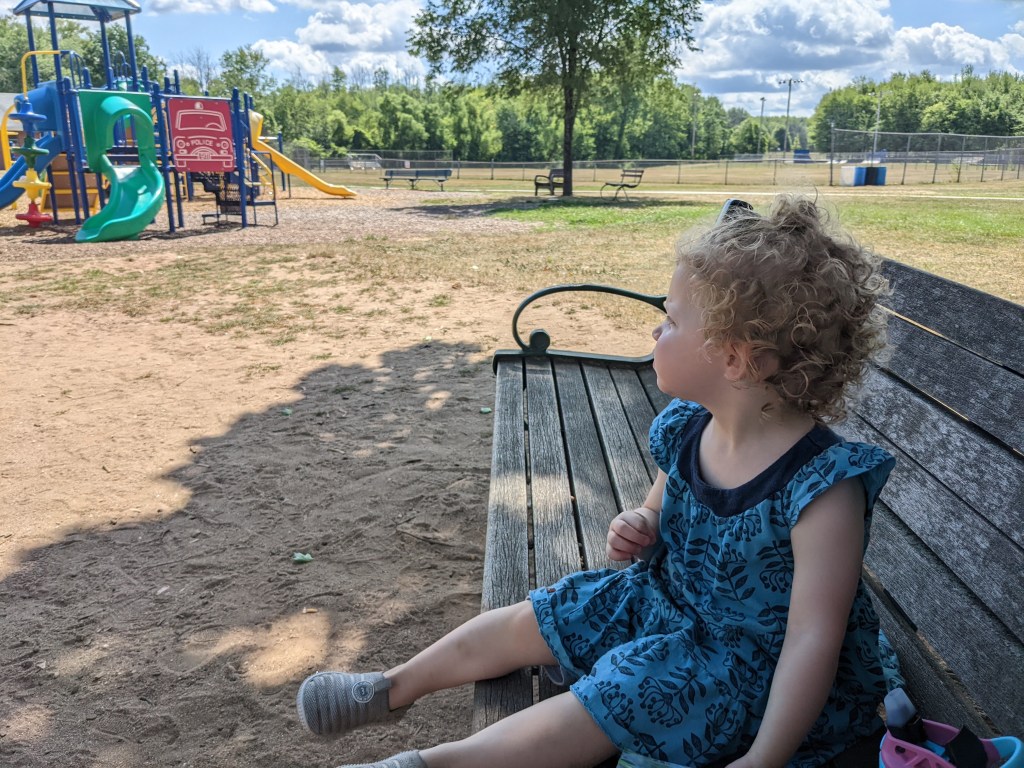
Accept that parenting is hard. So much of it is outside our control…in fact every tiny moment is outside our control. The more we can let go of expectations and lean into acceptance and grace the better. Perhaps then we can laugh and lean into unexpected moments of joy along the way. (photo taken that same evening when we made it to Middletown’s Crystal Lake Park)

“Momsomnia”

“If we are to wake up out of our patterning, a key element of that is to be able to pause, recognize and open to a larger space than the cocoon that our mind is creating in thought.”

Tara Brach

It’s somewhere between the hours of 1 and 3am. I can feel it in my bones. I’m purposely not looking at my phone to see the time as this messes with my head when I try to fall back asleep. I’m at the door to my bedroom, leaning my right ear against the wall to see if I can detect a sound coming from my daughter’s bedroom. We share a wall so it’s not too hard to tell when she’s up and when she is sleeping. Lately I’ve been waking up in the middle of the night, thinking I’ve heard a sound (a shrill cry, a yell, a strange outburst, etc.). However, when I give it a few moments the sound tends to dissipate, which is likely a sign that either I was hearing what’s called a “phantom cry” or that she is self-soothing and “rocking” herself back to sleep.

I knew that sleep deprivation would be an issue in the immediate postpartum weeks and months, but I never stopped to consider how one’s relationship with sleep would be forever changed once having a child. 

I’ve never been a great sleeper. Since as far back as I can remember, I have fallen asleep with the aid of white noise. I remember replacing my beloved white noise machine with a cheap clip-on fan my freshman year in college as I was embarrassed to bring what I used to call a “snore machine” into my dorm room. I attached it to my metal lofted bunk bed and would turn it on high every night to try and drown out the eclectic mix of sounds in the hallway. When traveling before the advent of smart phones, I would get creative and try different tactics to help myself fall asleep. For a semester in college while studying abroad I listened to Enya every night on my Walkman CD player until I nodded off. I remember my obnoxious foam headphones were not comfortable to sleep in but they were preferable to having no noise at all.

Now all these years later, and with multiple sources of white noise at my disposal (air purifier, white noise machine, and cell phone apps all playing simultaneously), I find myself in a new conundrum. My sleep is not my own anymore.

Since having my daughter I have become keenly aware that my sleep is all relative to her needs. In her first days, we would be lucky to get a couple hours of sleep in a row before being woken up. Once she would settle after an early morning feeding, I would try and give myself permission to drift back to sleep. But it was hard to do this with regularity as every night could end up looking a little different. Eventually my wife and I realized we didn’t need to be up at the same time and so we started taking different shifts, sleeping in our guest room when we weren’t “on.” We would switch places somewhere around 3/4am in time for the other one to “sleep in” past our daughter’s pending 5/6am feeding. On good days, she would go back to sleep after that feeding and we could either get ourselves up and showered, changed, etc. to get ready for work or we could crash and sleep all the way to 8/9am when she next woke up (a blissful treat when it happened).

Back then, the hours sort of melded together most days and we just hoped and waited for it to get better. As it turns out, we were one of the lucky ones. Our random assortment of sleep training techniques actually worked. Our daughter was sleeping 7/8 hour chunks by 3 months. And it’s only gotten progressively better.

Somehow though, as my daughter’s sleep has improved over the last 18 months, mine has gotten progressively worse.

So what’s going on here? Perhaps some of it is natural age-related changes to my body (I did just turn 40 after all). If I’m being honest with myself though, I think much of my sleep disruption is cognitive and presents itself in the form of mind games and self-manipulation. Just knowing that I could be woken up by a shrill cry or wail at any moment is enough to keep me in a sleep deprived trance most nights.

How is stress playing a role in exacerbating this dynamic? According to Nikki Trojanowski of mic.com, children’s crying can increase the sympathetic nervous system (SNS) arousal. This can mean instantly being awake and simultaneously feeling our hearts pounding, our palms or bodies sweating and our minds on high alert. Trojanowski explains, “One of the classic findings in stress research — initially done by endocrinologist Hans Selye — is that prolonged SNS arousal… wears the body down, essentially, but also puts a person in a permanent state of vigilance, which is wearying.”

As I’ve also been exploring in therapy, the narrative I tell myself about sleep (and if I’m being honest, about much of life) may be having the most profound impact on my sleep and well-being than any other factor.

I have a tendency to get stuck in a negative feedback loop and then lose a grip on what’s real and what isn’t. For example, my daughter wakes up one night due to teething or some other myriad of issues and I’m convinced I’m never going to sleep again. This negative, pessimistic voice then catapults me into a heightened, anxious space which then reinforces the negative thought. Pretty soon I’m on high maternal alert and ready to wake up the whole house. It’s a form of catastrophic thinking according to Cognitive Behavioral Therapy (CBT) therapy and is one of many different automatic thought patterns that can send someone down a rabbit hole. 

Another helpful concept which I’ve been aware of for years is the idea of the “second arrow.” Taken from Buddhism, the “first arrow” is the unpleasant experience we have that is not in our control, in this case, being woken up by a real or phantom cry. The second arrow is the more dangerous one though. As renowned psychologist and meditation teacher, Tara Brach describes, the second arrow is the judgement and self-blame that we shoot ourselves with as a result of the first arrow. (For example, “there must be something wrong with me if I keep waking up to phantom cries and can no longer catch a good night’s sleep.”) As Brach encourages, if we can show ourselves grace and compassion during these uncomfortable and unexpected moments, we will come to realize the second arrow is completely avoidable and in our power to control. 

Building on Tara Brach’s teachings, I can’t help but think about how to extinguish the proverbial second arrow by following in my daughter’s footsteps.

As noted earlier, when she wakes up repeatedly throughout the night (which I’ve come to learn is completely natural), she does not ruminate or cast blame on herself. She calls out if she really needs something. Otherwise, she breathes through it. Her self-soothing techniques of the moment include laying on her belly, sucking her thumb, and giving her (stuffed) “doggy” an extra squeeze. And then eventually she falls back asleep.

The middle of the night is not the time to go through all the “what-ifs” in my mind. Instead, when I wake up and feel pangs of anxiety, or wonder if I’ve heard something, I will try sitting up, acclimating myself to my surroundings, perhaps drink some water, and take some deep breaths. I will commiserate with the other phantoms of the night who are surely out there and if all else fails, start brainstorming about my next blog post. Sleep tight, everyone.

Glass is half…

Let the splash of colors in the setting sun remind you, at the end of it all, you have permission to be undone here.

Morgan Harper Nichols
Photo by Artem Lysenko on Pexels.com

The other day my daughter discovered she could climb up onto our black Ikea recliner chair. She would climb up, turn around, sit back down and slowly slither off the chair, only to repeat the same thing probably 20 more times over the next 20 minutes. I was in awe of her discovery and so proud of her for having the courage to flex this muscle. She was mesmerized by her newfound skill and this sense of wonder trickled out to every corner of the room.

In the short month that I’ve been home from work I’ve had several insights. One glaring insight which I’ve known to be true for countless years but am only just now starting to see more clearly is my tendency to focus on productivity. I am a hopeless perfectionist, always looking to identify what’s missing, what I have yet to accomplish, what is one more thing I can get done before the timer goes off. Not working in the traditional sense, over the last month it has become painfully obvious just how much I’ve valued productivity as a marker of my self-worth. Even though I no longer have a task list in Outlook that I’m monitoring, I can feel myself fighting the urge to fill every moment of the day with something worthwhile.

I’ve been listening to a book on Audible called Laziness Does Not Exist, by social psychologist, Dr. Devon Price. In it, Price provides a social and historical backdrop for how humans have come to see productivity and overachieving as a measure of self-worth. Through interviews, research and personal stories, Price explains that people today work far more than nearly any other humans in history. And yet, we often still feel we are not doing enough and we are not good enough.

In the months immediately after our daughter was born, when my wife and I were caring for her around the clock, I lamented often that I was getting “nothing” done. Laundry would pile up, the house unraveled, any form of exercise took a backseat. I struggled to find time to even return a phone call. I started obsessing over how many thank you notes I was able to churn out in a given day. Even putting a stamp and address on an envelope felt gratifying. In spite of the fact that we were literally keeping a tiny human being alive, I was grasping for what more I could do to feel productive. Taking a nap was hard. It meant I was losing precious hours in the day. I was a walking, breathing zombie but my internal task master persona was screaming from within.

Today, as my daughter rounds the 18 month mark, I am starting to realize I may have had it all wrong the past 20+ years I’ve been working. I can see now that I have been running on a false “high” in chasing my email inbox and to-do list every day.

I still have a deep yearning to check things off my personal to do list (returning calls, bills, chores, sending out the infamous thank you note). I am often carrying around a subtle sense of guilt and even shame for not “producing” enough. One friend likened this new space that I’m in to a period of detox. Amidst the fog I can start to see and feel what happens when I don’t count the seconds of productivity in each moment of the day.

My daughter continues to test her boundaries. Whether transforming an Ikea chair into a slide or dropping food onto the floor and then cracking up, she has a way of making time stand still.

May the color she brings to my life and the lessons she continues to teach me every day about slowing down guide me in the unfolding and unraveling of this need to produce and fill time with such precision. As Morgan Harper Nichols quotes, “…the permission to be undone here.”

The Journey Begins


Good company in a journey makes the way seem shorter. — Izaak Walton

post

I’ve been asked many questions in recent days. “What the heck are you doing? Why did you leave your job? What are you going to do now? How are you going to make this work financially? When are you going to start looking for another job?…” All of the questions are well-meaning. I can’t help but wonder though, is there a deeper meaning behind them? Is there a subtle judgement laced behind some of the questions? It’s okay. I’m asking myself some of the same questions.

There is a judgmental voice within that I’ve been trying to quiet for much of my life. It continues to rear it’s ugly head and did so with gusto last week on my 40th birthday. The questions and doubt were swimming around me… “you’re pathetic. unemployed and 40. You have nothing to show for yourself. Your accomplishments are null and void.” I can be pretty vile at times and with the advent of my 40th birthday I turned on myself.

When I take a step back though, and give myself just a little bit of room to breathe, I can see a light. A clearing. It’s still a bit hazy but I can see that I took this leap of faith for one of the most dignified reasons there is. I decided to leave my full-time job and insert a pause in my career for the sake of my family and my mental health. The last 3 years, since fall 2018 have been some of the most magical. And yet, at the same time, I’ve experienced some of the most challenging feats of my short life, trying to juggle what some say is “having it all.” A young marriage, buying a new home, the birth of our daughter. When I peel back the layers though, it’s been a much more nuanced journey.

From navigating the fertility process as a same-sex couple, a high-risk pregnancy, the mental toll we’ve all endured through the pandemic, the birth of our daughter in July 2020, a rippling postpartum anxiety and depression, the transition back to work over the last year, juggling a full time job and motherhood and what I am realizing now has been a slowly simmering state of Burnout.

I don’t think I’m unique. I know there are millions of other new moms (dads and caregivers) who are trying to navigate this balancing act. With this blog, I am hoping to document and reflect on the meaning behind taking a step back from the 9-5 grind while trying to raise a young child and preserve a family that has been tested through the waves of a pandemic. I realize I am fortunate to be able to take this leap of faith. Most women (and new parents) in my situation are not able to leave their jobs.

I hope that in taking this pause to be home with my young daughter and heal from what I’m realizing are years of running on empty, I can provide a glimpse into the benefits of slowing down. I will share stories, small moments, reflections on the past months and years leading up to today and will not be afraid to ask some hard questions of myself.

I invite you to join me on this journey, keep me company and let me know what you’re thinking. Let’s explore the art of taking a pause…