
Sometimes the most healing thing to do is remind ourselves over and over and over, other people feel this too.
Andrea Gibson

My alarm goes off most mornings around 5:30am. I hear the familiar vibration, followed by a paradoxical “sing songy” instrument that I think is meant to be soothing. I immediately hit snooze and then proceed to do the same thing 10 minutes later, and sometimes 10 minutes after that, and so on. I know research says this is not a healthy way to start the day. According to headspace, “We add to our stress by starting our morning in a fight with our alarms, where we eventually concede defeat.” It’s a bad habit and I find myself often spending the next 20 minutes or so repeating mantras in my head in an effort to convince myself that everything is okay…That I am okay. That I am strong and brave and wise. These are also the same affirmations I tell my daughter most nights, hoping to instill what has often been hard for me to accept for myself.
What is anxiety really? It is distinguished by the American Psychological Association (APA) from fear, which is considered an “appropriate” response to “a clearly identifiable and specific threat.” Despite this distinction, I think it’s still fair to say that fear is at the root of most anxiety and that anxiety plays out in all of us to some degree. While society has made tremendous progress in terms of normalizing anxiety and other mental health conditions, it still doesn’t welcome these emotions at the proverbial “table.” It’s still taboo, for example, to talk about anxiety and depression at the lunch table, with your supervisor or at your child’s parent-teacher conference. And therefore, too many people suffer alone.
I’ve been in and out of therapy to treat anxiety for over half of my life. This is hard to admit and yet, I think important to normalize. And I know today’s youth are struggling at even younger ages. The impact of the COVID-19 pandemic on youth, for example, has only exacerbated an already horrific downward trend.
With the international climate aflame with strife and violence, I’ve been spending a lot more time thinking about Epigenetics, intergenerational trauma and their impact on mental health. The idea that environmental factors or traumatic events can affect your genes and the way “your body reads and responds to your DNA” is hard to wrap your head around. And yet, I’m seeing it unpacked more and more, not just through a scientific lens, but within the arts, spiritual spaces and even counseling settings.
Now working for a Jewish organization whose mission is to fight hate and antisemitism, I’ve been spending a lot more time thinking about my own family lineage. While I’m sure my anxiety can be attributed to multiple factors, both environmental and genetic, I do wonder if my nervous system is responding, not just to perceived threats in my own life, but to those real threats that my ancestors battled with and against for centuries. How long have ancestors from within all of our communities been fighting off threats such as hate and bigotry and how does this dynamic play out in our bodies today? I wanted to know more. And so, I turned to literature.
I recently finished the novel, The Many Daughters of Afong Moy, by Jamie Ford, and am struck by how the role of Epigenetics is being explored through historical fiction as well. An Asian-American author, Ford unpacks the role of inherited trauma through the female lineage of Afong Moy, the first Chinese woman to set foot in the US in 1834. Ford beautifully weaves together stories of Moy’s descendants, including a nurse in China serving with the Flying Tigers in WWII, a young girl quarantined during an epidemic of bubanic plague in San Francisco in 1900 and Washington’s former poet laureate, Dorothy Moy, who is raising a daughter and fighting for her mental health in 2045. In pursuing an experimental treatment designed to mitigate inherited trauma, Dorothy Moy intimately connects with past generations of women in her family tree. While the novel weaves in elements of mysticism and science fiction, it is beautiful and heart-wrenching and feels very, very real.
When I was living overseas in France in 2010-2011 in my late 20’s, I decided to take advantage of my proximity to Eastern Europe and explore first hand where my family emigrated from and why they might have left. I am the first person in my family (that I’m aware of) to have taken the pilgrimage back to the tiny town in what is now Eastern Slovakia where my family lived, before emigrating to the United States in the 1880’s. Thanks to Wikipedia and the stories passed down from my grandfather with whom I was extremely close, I know that my great-great Uncle, late Rabbi Joseph Hertz was born in Rebrín/Rebrény, Hungary in 1872. This town is presently part of the village of Zemplínska Široká in Slovakia. Hertz emigrated to New York City in 1884 a year or two after his older brother, Emmanuel (my great Grandfather) and their father, Simon came looking for better opportunities, in the face of rising antisemitism at home.
Joseph went on to become the first graduate of the Jewish Theological Seminary of America in 1894 and would go on to serve as a Rabbi in New York and South Africa. He served his final post as the Chief Rabbi of Great Britain and the Commonwealth from 1913 through two world wars and until his death in 1946.
Every few years I go back and re-read aspects of his story and discover something I didn’t know before. In my latest reading, I learned that in 1920-1921 Rabbi Hertz was the first chief rabbi to undertake a “pastoral tour” of the British empire. His pilgrimage would take him over 40,000 miles and to over 40 Jewish communities around the world, including in South Africa, Zimbabwe, Australia, New Zealand, Fiji and Canada. Just reading this is a reminder that the Jewish diaspora is wide and nuanced, built upon waves of complexity and layers of history, going back to biblical times.
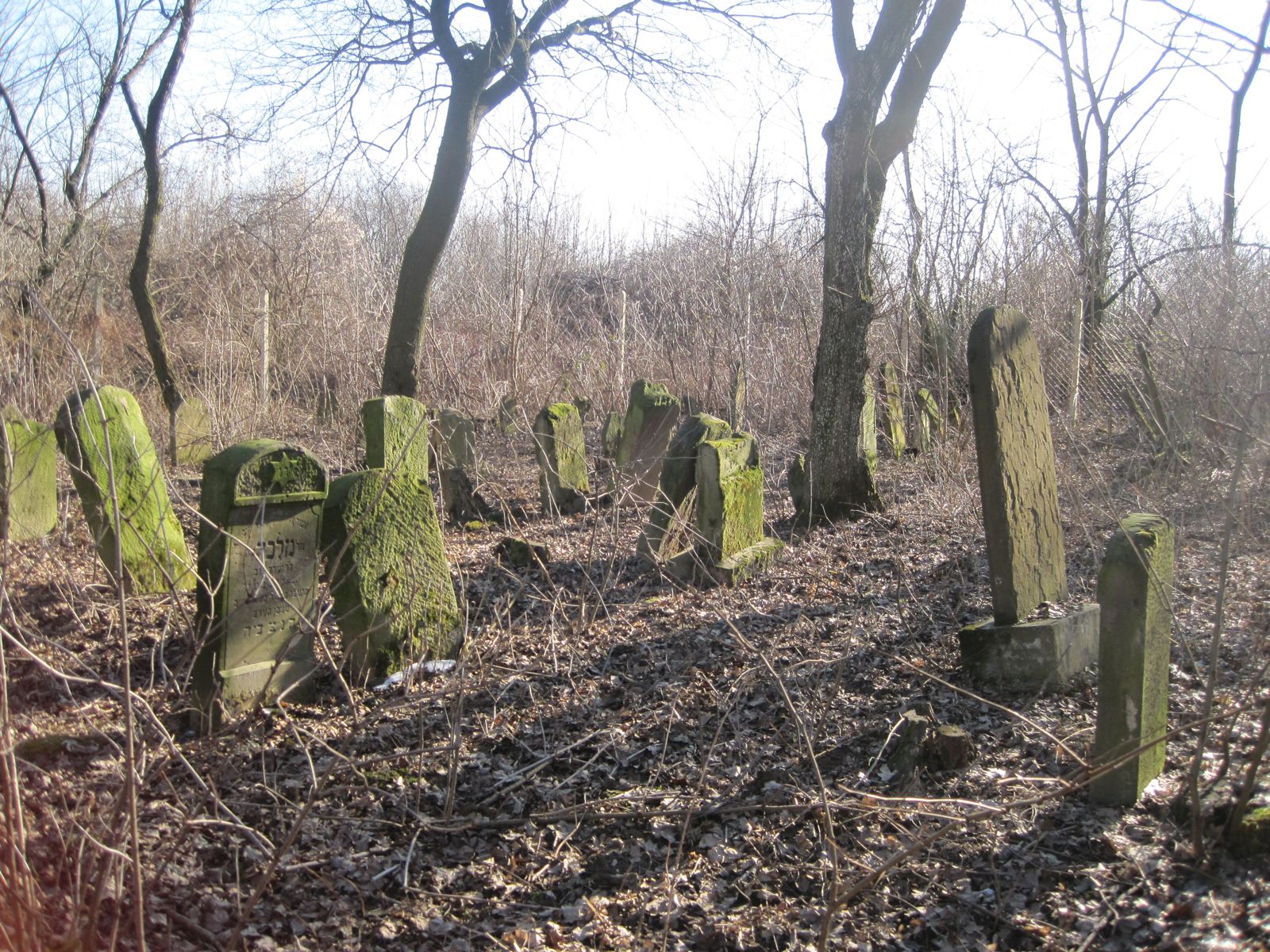
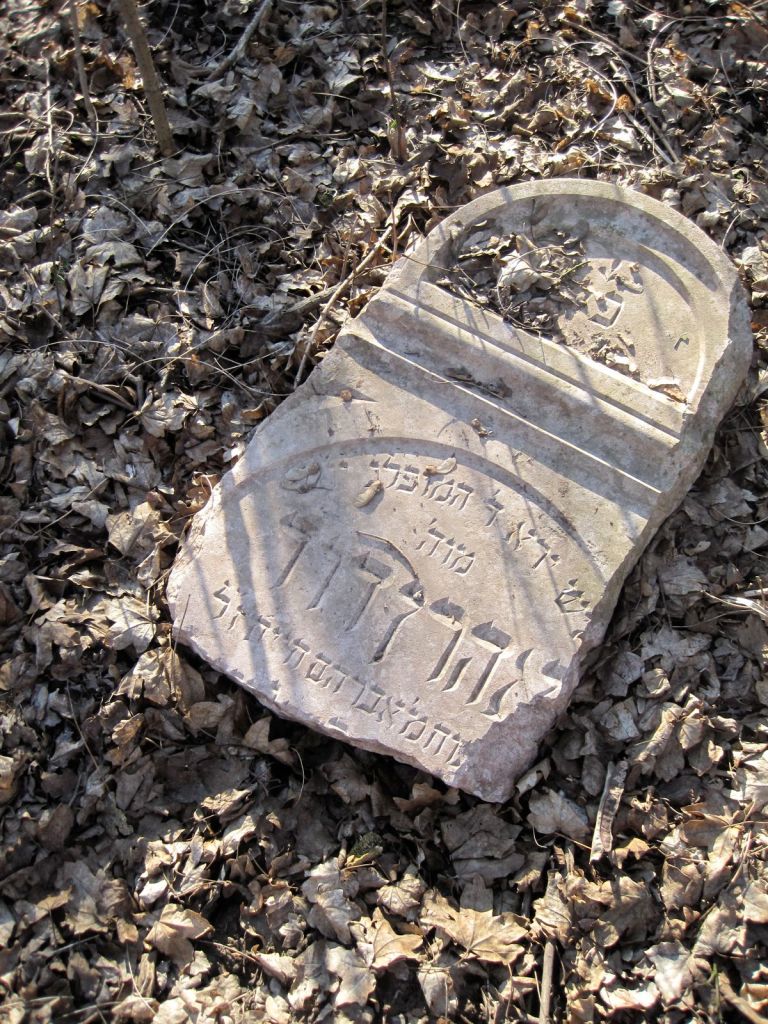
My own personal pilgrimage to the village of Zemplínska Široká in the spring of 2011 took me to a small town that was completely wiped of its Jewish population at the turn of the century. To get there, I took a 10 hour night train from Prague to Košice, a bus from Košice to Michalovce and another smaller bus from Michalovce to Zemplínska Široká. I had arranged beforehand to meet a local historian in Michalovce who was kind enough to drive me to an old, overgrown and abandoned Jewish cemetery outside of town. I wanted to see if I could find the grave of my great aunt’s grandparents who were believed to be buried in that town (hence the photos above and below). While I didn’t find their specific tombstones I did find one with the same family name I was searching for (Friedman). It was remarkable to be that close to my own family story and yet to know so little about what they went through to pave the way for my family light years away.
And here I am in 2023, raising a family of my own in Middletown, CT. As I write these words I question if I am struggling with some existential desire to answer an unspoken cry from my ancestors. What am I in search of that they never found? What inherited trauma has been passed down to me that I must embody and then let pass through me, so that it doesn’t get passed down the family line even further.
How does inherited trauma continue to play out in our own bodies and become experienced as anxiety?
I’m not sure where this search will lead, but I know that I must take a pastoral tour of my own, to understand why and from where our pangs of unworthiness, fear and anxiety stem. I know I am not alone. And I know that the answer lies in 1000 different places.
When I wake up tomorrow though, and find myself at battle with my snooze button, I will try and be just a little kinder to myself and lean into the strengths passed down from generations of ancestors who were likely all just trying to do the same.
לְדוֹר וָדוֹר, l’dor vador, “from generation to generation”
An ancient concept in Judaic scripture generally interpreted to mean that we have a responsibility to pass on teachings from one generation to the next.



 Taking a Pause at 40