This being human is a guest house. Every morning a new arrival.
A joy, a depression, a meanness, some momentary awareness comes as an unexpected visitor.
Welcome and entertain them all! Even if they’re a crowd of sorrows, who violently sweep your house empty of its furniture, still, treat each guest honorably. He may be clearing you out for some new delight.
The dark thought, the shame, the malice, meet them at the door laughing, and invite them in.
Be grateful for whoever comes, because each has been sent as a guide from beyond.
~By Jalaluddin Rumi
A poem for a difficult season. When the light feels hard to find. And I don’t want to dance as much.
How can I slowly crawl back to my younger self who danced with the wind, who didn’t notice who was looking when she sprawled out in all her richness, creating a world of fantasy as she moved?
I’ve somehow lost that vision lately, or maybe lost it years and years ago. I have felt so burdened and even crushed by all the self-imposed “to do’s” that I’ve forgotten about the moments of life in between.
I started this blog a little over 3 years ago (fall 2021), in another season of my life when I needed to soak up the wisdom contained in slowing down. That was the whole premise of the blog, in fact, to journal and reflect on the benefits of slowing down, even if by 1%. In some ways I feel like I’m right back where I started, at another critical inflection point, unsure of which turn to take next. The growing demands and intensity of work and motherhood continue to push many of us to our limits. Too fast, too much, too packed. And not feeling in control. How do we get that control back?
Lately it’s felt like I’ve been swimming upstream and I know I need to start a slightly different dance.
In this new year, can I stop long enough to find others who will dance with me, alongside me and even mirror me? Can I slow down enough to see all the music and the movements that nature holds in its own dance? Can I slow down long enough to make space for those I love, not for us to accomplish anything, but for us to just be still together?
To sit around a table and enjoy the company, without worrying about who is cleaning up. To do a puzzle together. To play the Bluey Jenga game we gave our daughter for Hanukkah. To sit long enough to watch the PBS New Year’s Eve Countdown 2024 with DJ Walrus and Friends (instead of cleaning the kitchen). Guess what? I watched 95% of it this year alongside her, without my phone in my hand. DJ Walrus needs to get another day job though in my humble opinion. Sorry, Mr. Walrus.
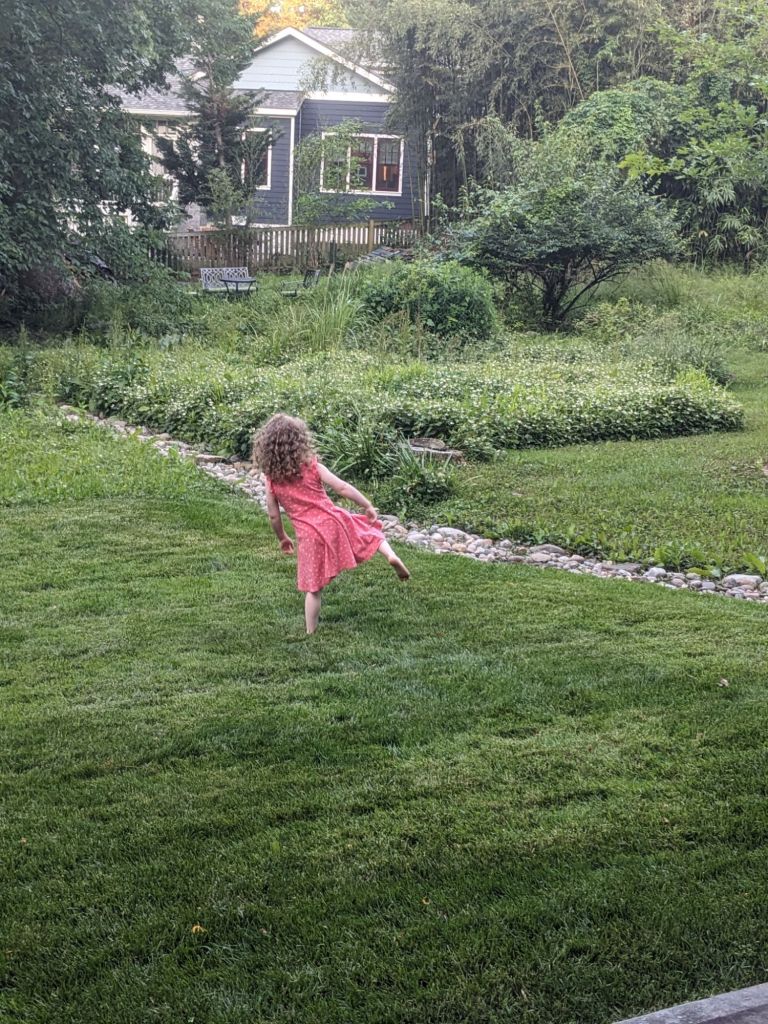
In this new year, can I join my daughter in HER dance and learn more about the true art of slowing down? While she moves a mile a minute, she does focus her attention on just one thing at a time. In the quiet (or not so quiet moments) when she’s playing by herself, may I try once in a while to not fill the time with another chore, but instead to just breathe, soak up the energy of her play and even join in. I know my kid, competitive and playful nature is in there somewhere!
This year, Hanukkah coincided with Christmas and New Years, the holiday trifecta. For the first time in what felt like years, my family sat around the table on the 6th night of Hanukkah (the night before New Year’s Eve) and played dreidel by candlelight. We took turns spinning our own miniature dreidels and laughed out loud as the Hebrew letters were called out. My daughter was the most excited of all and belted with pride as she landed on a gimel (which stands for “gantz” or “everything.” The player gets everything in the pot.)
Wishing us all a quiet and peaceful turn of the new year. May we all find some light and abundance amidst the darkness.
“Make new friends, but keep the old. One is silver, the other is gold.
A circle is round, it has no end. That’s how long, I will be your friend.
A fire burns bright, it warms the heart. We’ve been friends, from the very start.
You have one hand, I have the other. Put them together, we have each other.
Silver is precious, gold is too. I am precious, and so are you.
You help me and I’ll help you and together we will see it through… Girl Scouts of the USA
Friday, June 14, 2024. What would have been a typical Friday. Dropping my daughter off at school. Staying for an Early Childhood (EC) Shabbat morning gathering at her preschool. But today, in a mere moment, I’m catapulted into a time machine. I drop my daughter off at her “old” school for the summer. (It is a family run daycare that has a preschool within it). She will attend from mid-June to mid-August, just barely two months. No big deal, right? It was a logistical decision really, to bridge us from one school year to the next at our new Jewish community day school, where our daughter has thrived this past school year. She’s grown by leaps and bounds. There have of course been some bumps but we have ridden the waves of transition and she has settled into a new “home.”
Finding ourselves back at the doorstep of our “old” school is like putting a mirror in front of us where I’m unexpectedly reflecting back on myself and this past year. Am I proud of what we have accomplished? Can everyone see my wrinkled forehead now? Why does it feel like we continue to ride the waves of a new family? The transitions just keep coming…
And this “old school” is the school where we first dropped our daughter off when she had barely started walking, at about 14 months old. She was known for her “babbling,” going on and on and on with gibberish before she learned to put her words together. Before she started singing Moanna lyrics and dancing to her new beats. This is where her teachers picked her up to change a diaper on the large wooden changing table and slobbered sunscreen on her before going outside. Where she had her first skinned knees. Where we learned she was a “jokester,” egging on the other students to join her in a mischievous rebellion. Where we learned from her teachers that she was incredibly bright and hard-willed. Standing in the center of the room, refusing to leave when the rest of the group was transitioning from one activity to the next. “I don’t want to X, Y, Z!” she would exclaim. Transitions have always been hard for her (and now I know where she gets that from).
Last summer when we said goodbye to her old school, she had just turned three. She was so brave and went with the flow as we moved her in July for her birthday to a new preschool room within the school and then again at the end of August to a whole new school. She looks around the room this morning, following my eyes looking nervously around the room too. Wondering perhaps, where do I put my lunchbox here? I hang my backpack on a hook and not in a cubby? My parents come inside for drop off instead of saying goodbye outside? All seemingly innocuous, trivial concerns, but in the head of a toddler, not insignificant at all.
Our daughter’s time at the “old” school last summer was a fog. A blurry haze. On June 15, 2023 I broke my ankle in a freak accident. One week later I had major surgery and two weeks later I started a new full time job. I stumbled into this school on my crutches most of the summer to do drop off.
And today I find myself asking, what have I been present for in the last year? What has changed? What has stayed the same?
It’s now summer 2024…I’m jogging (albeit slowly) again. I’m more confident working full time again since having my daughter. I have colleagues I respect. We’ve weathered (and continue to weather) deep, deep trauma from upheaval in Israel and Gaza…the existential threats and panic it’s brought to our bodies and our people. It has been all-consuming. And yet, after a year attending a Jewish day school, our daughter can now recite the prayers on Shabbat. She hums and mumbles tunes in Hebrew, without being aware that I’m listening. My heart warms for the community she’s created and the safety and comfort of her “new” school.
AND I can be grateful that she will be held in safety this summer too. She will step back and forward at the same time. She will continue to stretch and grow, even with the time machine we’ve placed before her.
I stand back in awe as she points out letters on the carpet she knows and peers through the window at the gaping playground she just barely remembers climbing on as a 3 year old. “I remember that playground. I love that playground,” she says. My heart constricts and then releases. And I remember, we are okay. We have been through a lot this year, AND we are okay.
We can take two steps forward and two steps back at the same time. This is not a contradiction. Or perhaps it is and then life is a moving target of contradictions.
And rather than resist and make sense of all the waves intellectually, we can exhale and let go of the resistance and the constriction. I will accept that this summer will bring with it a new journey for her and for us. A new plethora of trail heads. All pointing in different directions. And our daughter will bravely explore them all. With gratitude for new beginnings and old memories all seeped into one. I’m still a bit hesitant but grateful to be welcomed back.
Perhaps our reflections and “time travel” do not need to be projected on our children. Our waves of emotions and dizziness at times do not have to dictate their journeys.
May we lean into each day at this “new/old school,” making new memories, built upon layers and layers of old ones, that form a foundation on which we keep moving forward.
“Time is relative; its only worth depends upon what we do as it is passing.”
Albert Einstein
When you become immobilized in making a decision about how to spend your 1.5 hours of “free” time while your child is napping.
When it feels impossible to transition between the seemingly endless “to do’s” and resting because a voice deep inside you is screaming that you may not have “enough” time to get your “to do’s” accomplished later.
When you call the doctors office at the last minute to apologize that you’ll be running 10-15 minutes late due to traffic, but really you just couldn’t stop cleaning up the kitchen or getting in one last load of laundry before you left (referencing back to scenario 2).
The daily fight with time has been something I’ve reckoned with for what feels like forever. But when I was recently asked by a coach to think about when I first became aware of time as an oppressive phenomenon, I froze. I couldn’t remember when the plague of “time scarcity” began. Perhaps it was in college, when I found myself for the first time, living on my own and making decisions apart from my parents about how to structure and manage large blocks of time. I do remember feeling uptight about assignment deadlines and the like but when I look back on those years, it feels like time was never-ending. The days would last well into the evening, going to sleep for 2am was not uncommon and sleeping to 10am for an 11am class was the norm. No, it wasn’t then. Time flowed like honey and there was always more to be found.
I do have a distinct and sticky memory of becoming aware that time was a construct when I studied abroad in Senegal my junior year of college. I remember when one of my Senegalese professors with whom I became close, shared that in Senegal (and across Africa) there was a completely different rationalization given when people were “running late.” He explained that when a friend or colleague was “late,” it was natural to assume they were intercepted by something that was important and necessitated them taking more time. If a person was late, for example, for a rendez-vous with friends, you might assume that a sick family member needed them. In other words, you naturally gave people grace and a built in buffer. NOTHING started on time and everyone gave one another the benefit of the doubt.
—
More than 20 years later and with the advent of smart phones, I can’t help but wonder if the oppressiveness of “white supremacy culture” in our country has seeped in and made it that much harder to let go of a constant sense of urgency.
People have been working and raising families for millennium. How has technology become so all-encompassing and resulted in us being more tethered to time than ever before?
An irony is that I stopped wearing a watch years ago. I rely on my cell phone to monitor the day and time for me now. We have and own more things than ever before, and yet time feels scarcer than ever before.
As a “newer” parent, I’ve noticed just how many references to time fall into our vernacular when talking to our children…
“Running late,” “must be on time,” “wasting time,” “time is ticking,” “we can’t be late,” “on time is late,” “respect my time,” “time is precious.” When I catch myself using time vernacular in these contexts I try to divert myself and say something different. “It looks like you need some help before we go, let’s keep moving, or we need you to participate.” It’s fascinating and sad in a way that we superimpose our construct of time on children, who are blessed (we hope) with not needing to be fully aware of it (yet).
I remember picking up the book, Einstein’s Dreams (Alan Lightman) in my early 20’s and my mind being blown away. Lightman imagines dreams that Einstein might have had in 1905 when he was dreaming up his theory of relativity. Each dream portrays a world in which time works differently. In one world, for example, time is circular and people repeat their highs and lows over and over (not too dissimilar from the concept presented in the movie Groundhog Day, which also fascinated me at the time). In other worlds, time moves backwards and people’s journeys unfold in reverse order. This journey is also fleshed out in movie form in the film, The Curious Case of Benjamin Button. I was equally fascinated by this story and have found my mind wandering back to it over the years.
—
In the end, I wonder if the way we relate to time is relative to our human complex with mortality. After all, time is finite. Our days are numbered, and even if we are Benjamin Button, getting younger with time, we eventually become absorbed back into the universe. The material things we surround ourselves with, the busyness we become immersed in…might all of this be an illusion and a distraction from our fear of the inevitable?
The many colloquial expressions about time are steeped in truth. Time does move faster as we get older. Not literally, but relative to our spirits. We are more consumed with responsibility, and our bodies forget or become disillusioned with the present, even to the point of becoming disembodied. How can we fight back against this, so that we don’t blink and find ourselves looking back at years of “wasted time?”
Perhaps one helpful concept which flips time on its head is Shabbat, the Jewish day of rest. It occurs each week from sunset on Friday through sunset on Saturday, and is celebrated by Jewish communities around the world. I remember starting to incorporate it into my life spiritually and therapeutically as a graduate student. Living in Washington, DC, and swimming in a culture of political and professional networking mania, time became all-consuming. I remember finding it particularly challenging to “turn off.” I felt pressure to always be “on” or working. As part of my therapy, I began instituting certain boundaries for myself on Shabbat. Over the years, this concept has become trendy. The idea of a “technology shabbat” has been coined, but for me, it has been a lifeline to sanity.
I’ve experimented over the years with observing a form of Shabbat, from shutting down my phone to not allowing myself to check email or be on any screen. I find it is a welcome respite from the noise of the week. In fact the only day I often give myself permission to slow down enough to write creatively has been Shabbat.
How can I give myself permission to incorporate a “tech Shabbat” on other days and in other moments of the week? In the hybrid world of work we now live in, it has become even harder to create these boundaries. Access to “work” can literally be in your pocket or in your ear bud at any point in the day or night. We must reset our own priorities as no one else will do it for us.
—
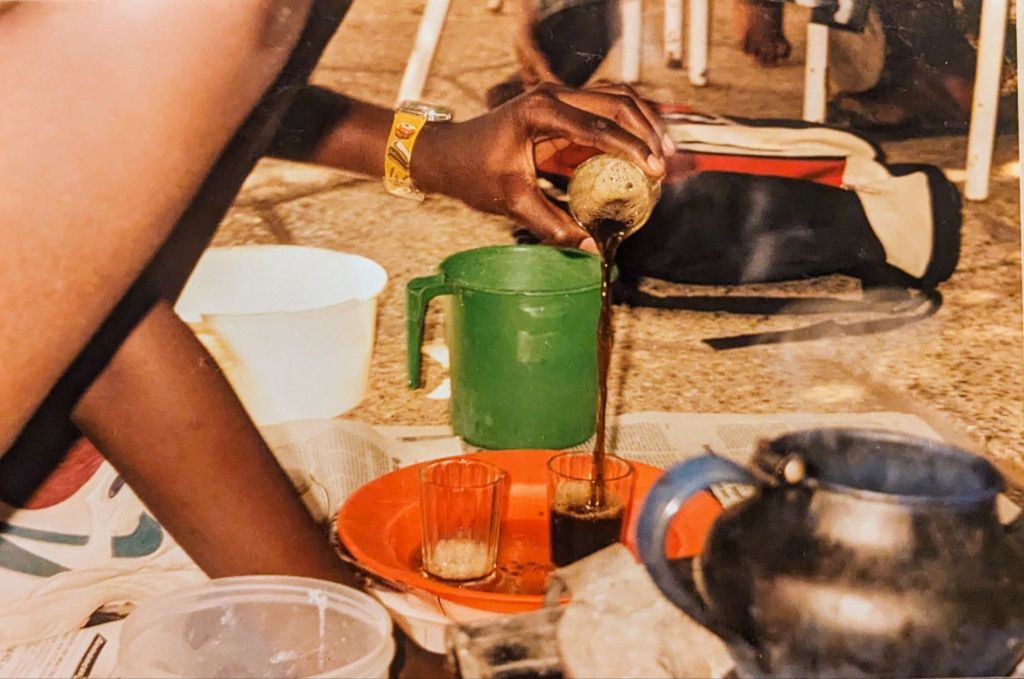
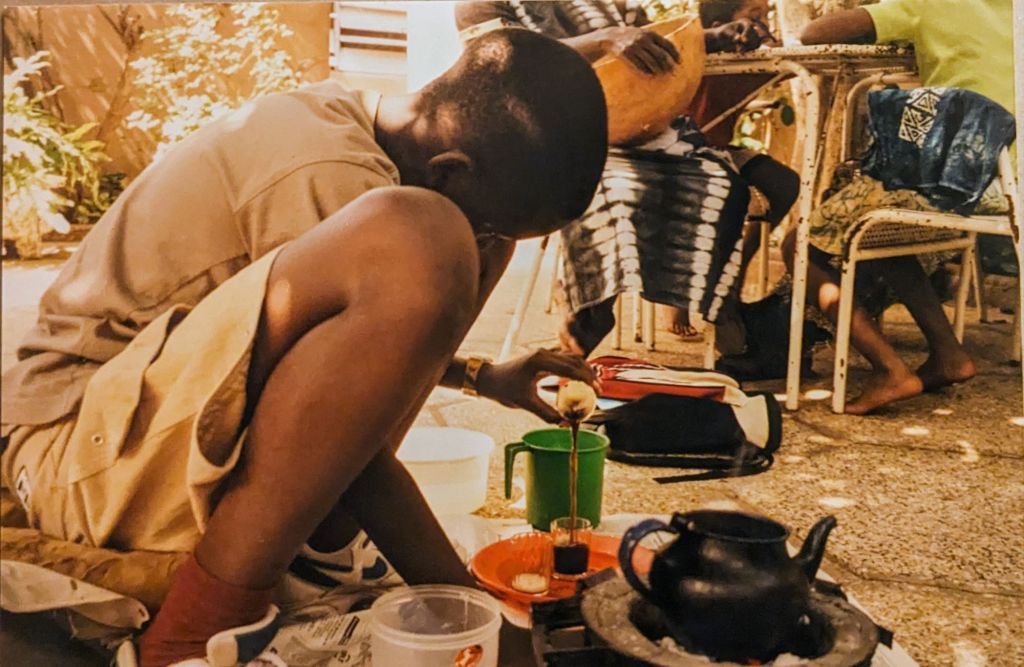
I’d like to close with the concept of “Ataya” or the three-cup ceremonial tea drinking tradition I learned about in Senegal. Ataya, which in Wolof translates to the “preparation of tea,” is an integral part of Senegalese culture. “Each cup represents the growth of friendships or the stages of life. The longer you wait for your Ataya, the stronger and sweeter friendships grow.” Whether it’s the start of a family visit or a business meeting, or even rounding a street corner on your way to the market, you can always find someone making Ataya.
Slowly, over the course of the six months I lived in Senegal, my body and spirit acclimated to slowing down and engaging in this ritual. Often sitting on cushions, friends and peers gather around a tray of small glass cups and boiling water, waiting for the tea leaves, mint and sugar to simmer. The act of pouring the tea back and forth, from cup to cup, slowly building and creating a foam lather, is a form of meditation in and of itself. You finish your tea when…you finish. Time isn’t in control. Instead, it is the tea and sweet moments of connection that call the shots.
—
My eyes flutter open after taking a short nap while my daughter sleeps. I take a deep breath and sigh. It is Shabbat again and I’ve given myself permission to rest and write. A sweet gift that I don’t think I will ever take for granted again since becoming a parent. I know the laundry waits. Emails are likely piling up. And I’ve got a list of errands to run and people to call back. But for right now, I will practice surrendering my time to the universe and being grateful for the early spring trees outside my window, slowly swaying in the cool wind.
The highest version of myself comes out in these moments. Her voice is quiet but I can feel her trying to speak. She’s saying, “shhh, quiet down now, just be sweet girl, resist the urge to move and do and accomplish. Your life awaits in the present moment. You have my permission to play.”
“The world has our hands, but our soul belongs to Someone Else. Six days a week we seek to dominate the world, on the seventh day we try to dominate the self.”
Rabbi Abraham Joshua Heschel
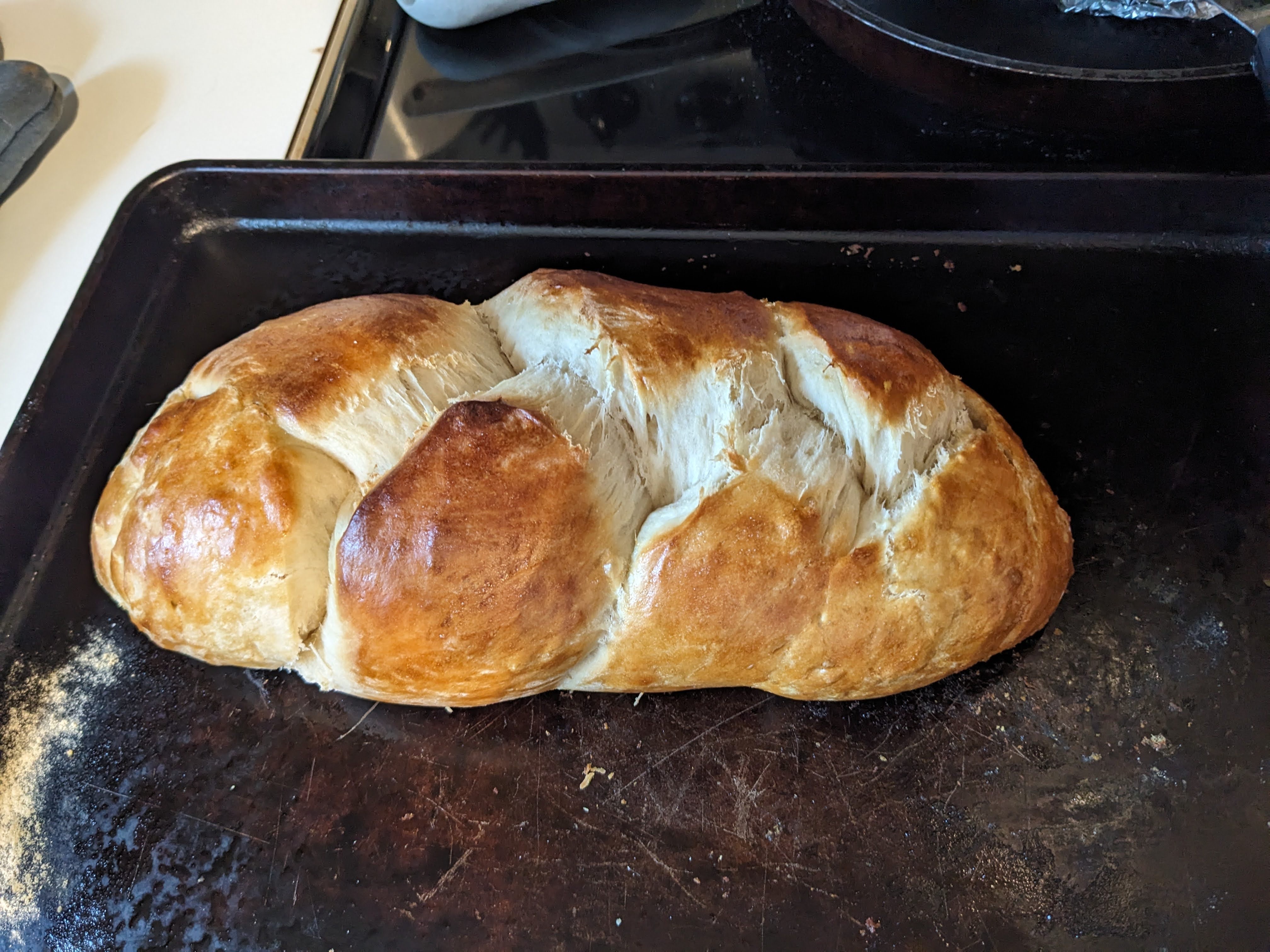
Dakar, Senegal, 2002Attaya Ritual with Host FamilyHomemade Shabbat Challah
Sometimes the most healing thing to do is remind ourselves over and over and over, other people feel this too.
Andrea Gibson
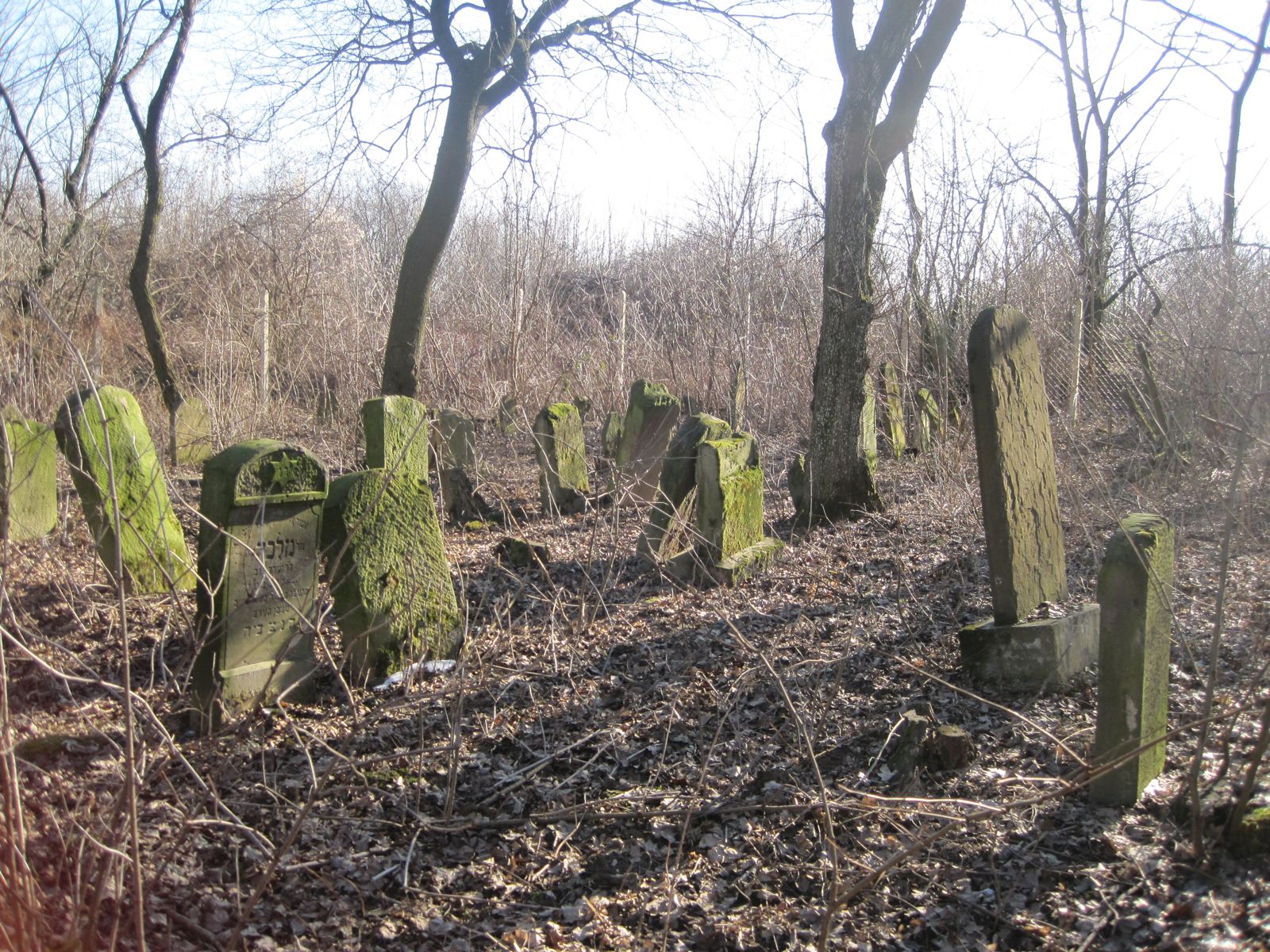
Photo by Ricky EsquivelStranany Cemetery, Michalovce, Slovakia, March 2011
My alarm goes off most mornings around 5:30am. I hear the familiar vibration, followed by a paradoxical “sing songy” instrument that I think is meant to be soothing. I immediately hit snooze and then proceed to do the same thing 10 minutes later, and sometimes 10 minutes after that, and so on. I know research says this is not a healthy way to start the day. According to headspace, “We add to our stress by starting our morning in a fight with our alarms, where we eventually concede defeat.” It’s a bad habit and I find myself often spending the next 20 minutes or so repeating mantras in my head in an effort to convince myself that everything is okay…That I am okay. That I am strong and brave and wise. These are also the same affirmations I tell my daughter most nights, hoping to instill what has often been hard for me to accept for myself.
What is anxiety really? It is distinguished by the American Psychological Association (APA) from fear, which is considered an “appropriate” response to “a clearly identifiable and specific threat.” Despite this distinction, I think it’s still fair to say that fear is at the root of most anxiety and that anxiety plays out in all of us to some degree. While society has made tremendous progress in terms of normalizing anxiety and other mental health conditions, it still doesn’t welcome these emotions at the proverbial “table.” It’s still taboo, for example, to talk about anxiety and depression at the lunch table, with your supervisor or at your child’s parent-teacher conference. And therefore, too many people suffer alone.
I’ve been in and out of therapy to treat anxiety for over half of my life. This is hard to admit and yet, I think important to normalize. And I know today’s youth are struggling at even younger ages. The impact of the COVID-19 pandemic on youth, for example, has only exacerbated an already horrific downward trend.
With the international climate aflame with strife and violence, I’ve been spending a lot more time thinking about Epigenetics, intergenerational trauma and their impact on mental health. The idea that environmental factors or traumatic events can affect your genes and the way “your body reads and responds to your DNA” is hard to wrap your head around. And yet, I’m seeing it unpacked more and more, not just through a scientific lens, but within the arts, spiritual spaces and even counseling settings.
Now working for a Jewish organization whose mission is to fight hate and antisemitism, I’ve been spending a lot more time thinking about my own family lineage. While I’m sure my anxiety can be attributed to multiple factors, both environmental and genetic, I do wonder if my nervous system is responding, not just to perceived threats in my own life, but to those real threats that my ancestors battled with and against for centuries.How long have ancestors from within all of our communities been fighting off threats such as hate and bigotry and how does this dynamic play out in our bodies today? I wanted to know more. And so, I turned to literature.
I recently finished the novel, The Many Daughters of Afong Moy, by Jamie Ford, and am struck by how the role of Epigenetics is being explored through historical fiction as well. An Asian-American author, Ford unpacks the role of inherited trauma through the female lineage of Afong Moy, the first Chinese woman to set foot in the US in 1834. Ford beautifully weaves together stories of Moy’s descendants, including a nurse in China serving with the Flying Tigers in WWII, a young girl quarantined during an epidemic of bubanic plague in San Francisco in 1900 and Washington’s former poet laureate, Dorothy Moy, who is raising a daughter and fighting for her mental health in 2045. In pursuing an experimental treatment designed to mitigate inherited trauma, Dorothy Moy intimately connects with past generations of women in her family tree. While the novel weaves in elements of mysticism and science fiction, it is beautiful and heart-wrenching and feels very, very real.
When I was living overseas in France in 2010-2011 in my late 20’s, I decided to take advantage of my proximity to Eastern Europe and explore first hand where my family emigrated from and why they might have left. I am the first person in my family (that I’m aware of) to have taken the pilgrimage back to the tiny town in what is now Eastern Slovakia where my family lived, before emigrating to the United States in the 1880’s. Thanks to Wikipedia and the stories passed down from my grandfather with whom I was extremely close, I know that my great-great Uncle, late Rabbi Joseph Hertz was born in Rebrín/Rebrény, Hungary in 1872. This town is presently part of the village of Zemplínska Široká in Slovakia. Hertz emigrated to New York City in 1884 a year or two after his older brother, Emmanuel (my great Grandfather) and their father, Simon came looking for better opportunities, in the face of rising antisemitism at home.
Joseph went on to become the first graduate of the Jewish Theological Seminary of America in 1894 and would go on to serve as a Rabbi in New York and South Africa. He served his final post as the Chief Rabbi of Great Britain and the Commonwealth from 1913 through two world wars and until his death in 1946.
Every few years I go back and re-read aspects of his story and discover something I didn’t know before. In my latest reading, I learned that in 1920-1921 Rabbi Hertz was the first chief rabbi to undertake a “pastoral tour” of the British empire. His pilgrimage would take him over 40,000 miles and to over 40 Jewish communities around the world, including in South Africa, Zimbabwe, Australia, New Zealand, Fiji and Canada. Just reading this is a reminder that the Jewish diaspora is wide and nuanced, built upon waves of complexity and layers of history, going back to biblical times.
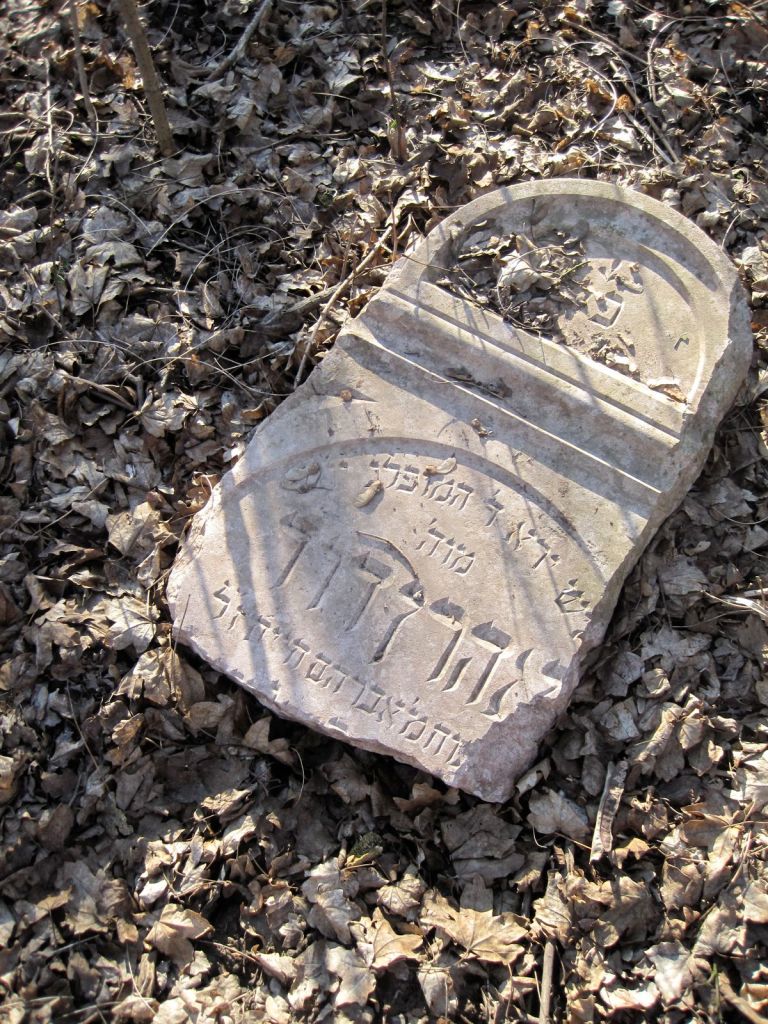
My own personal pilgrimage to the village of Zemplínska Široká in the spring of 2011 took me to a small town that was completely wiped of its Jewish population at the turn of the century. To get there, I took a 10 hour night train from Prague to Košice, a bus from Košice to Michalovce and another smaller bus from Michalovce to Zemplínska Široká. I had arranged beforehand to meet a local historian in Michalovce who was kind enough to drive me to an old, overgrown and abandoned Jewish cemetery outside of town. I wanted to see if I could find the grave of my great aunt’s grandparents who were believed to be buried in that town (hence the photos above and below). While I didn’t find their specific tombstones I did find one with the same family name I was searching for (Friedman). It was remarkable to be that close to my own family story and yet to know so little about what they went through to pave the way for my family light years away.
And here I am in 2023, raising a family of my own in Middletown, CT. As I write these words I question if I am struggling with some existential desire to answer an unspoken cry from my ancestors. What am I in search of that they never found? What inherited trauma has been passed down to me that I must embody and then let pass through me, so that it doesn’t get passed down the family line even further.
How does inherited trauma continue to play out in our own bodies and become experienced as anxiety?
I’m not sure where this search will lead, but I know that I must take a pastoral tour of my own, to understand why and from where our pangs of unworthiness, fear and anxiety stem. I know I am not alone. And I know that the answer lies in 1000 different places.
When I wake up tomorrow though, and find myself at battle with my snooze button, I will try and be just a little kinder to myself and lean into the strengths passed down from generations of ancestors who were likely all just trying to do the same.
לְדוֹר וָדוֹר, l’dor vador, “from generation to generation”
An ancient concept in Judaic scripture generally interpreted to mean that we have a responsibility to pass on teachings from one generation to the next.
Stranany Cemetery, Michalovce, Slovakia, March 2011






 Taking a Pause at 40